

Client Focus: Built for Healthcare's Hardest Problems
Video




Strong evaluation results do not speak for themselves. Even the most rigorous analysis can fail to drive action if stakeholders do not understand what the findings mean, why they matter, and what should happen next.
For states participating in the Centers for Medicare & Medicaid Services (CMS) Rural Health Transformation Program (RHTP), a meaningful evaluation is an opportunity to demonstrate how federal investments are improving America’s rural health systems. The challenge is describing these impacts—stronger access to care, local innovation, and better health outcomes—in a way that resonates with CMS reviewers, state leaders, legislators, providers, and the public. That way is often through data storytelling.
Abt Global has supported state and local leaders for decades to describe the true value of their work. Here are a few of our primary data storytelling principles:
A common reporting mistake is assuming every audience needs the same information. Actually, each group views program success through a different lens. Here are some for RHTP:
The underlying data may be the same, but the story should be tailored to the audience.
Here’s an example: Abt Global supports Customer Value Partners (CVP) to evaluate the HRSA Rural Communities Opioid Response Program (RCORP). We collect and report vast amounts of qualitative and quantitative data for reporting to HRSA and Congress.
But when we presented this program at the 2026 New England Rural Health Association Conference, we narrowed the focus to match the conference audience: rural healthcare and service providers. Abt and CVP described measurable improvements in access to services, and the best practices and challenges encountered by RCORP grantees to share lessons learned and build connections among New England’s service providers.
States participating in RHTP collect significant amounts of performance and implementation data. Effective communication requires translating those data into outcome and impacts, paired with appropriate programmatic context so decision-makers can quickly understand.
Data visualizations are the key here, as long as they:
Interactive dashboards can help CMS and state leadership monitor progress, while infographics, one-page briefs, and executive summaries may be more effective for legislators and community audiences.
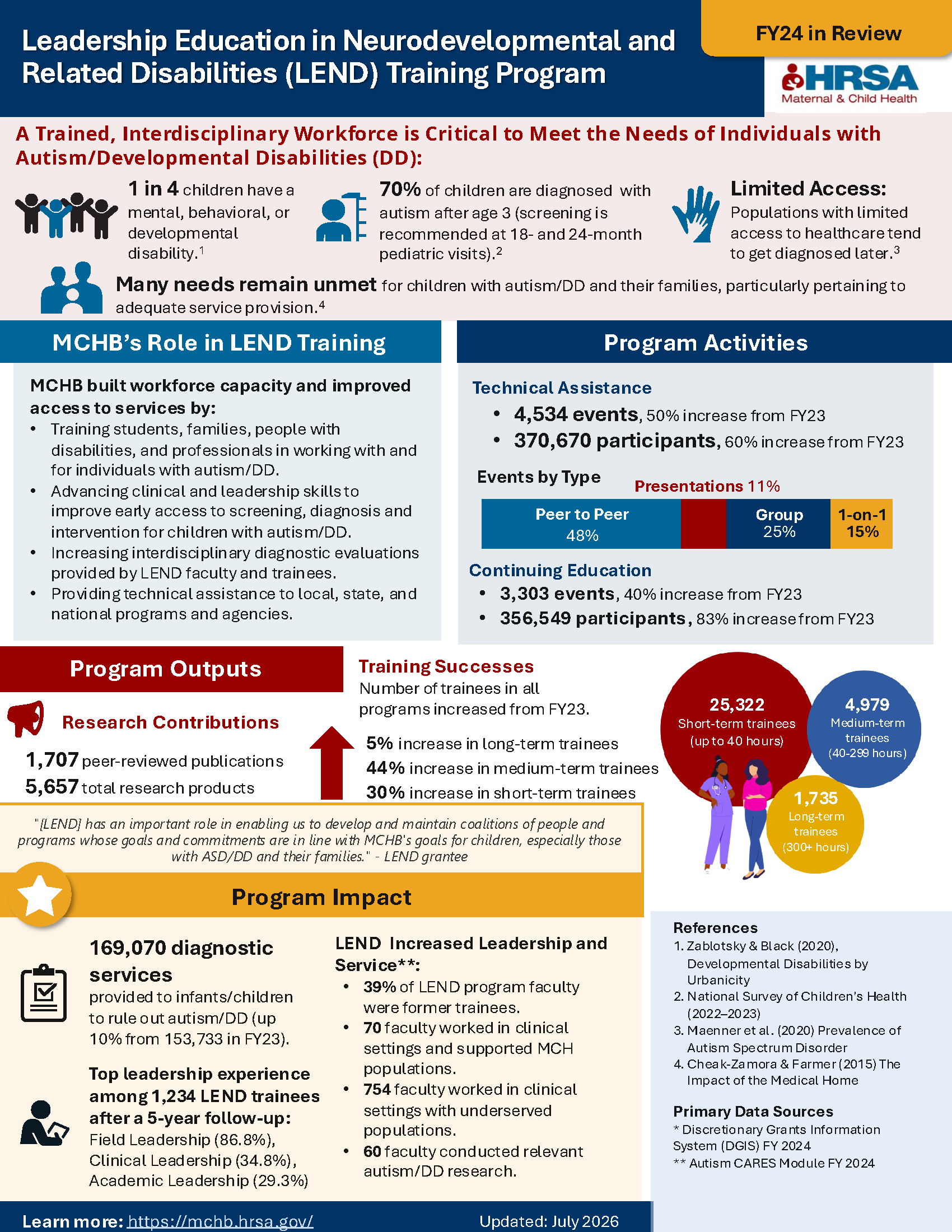
As part of Abt’s evaluation of the Maternal and Child Health Bureau’s (MCHB) Autism CARES programs, we developed a data snapshot for each program. These included background on the need, MCHB’s role, programmatic outputs, and broader impacts of the program’s work. These brief snapshots have transformed how our clients communicate the value of their programs to federal leaders, partners, grantees, and communities.
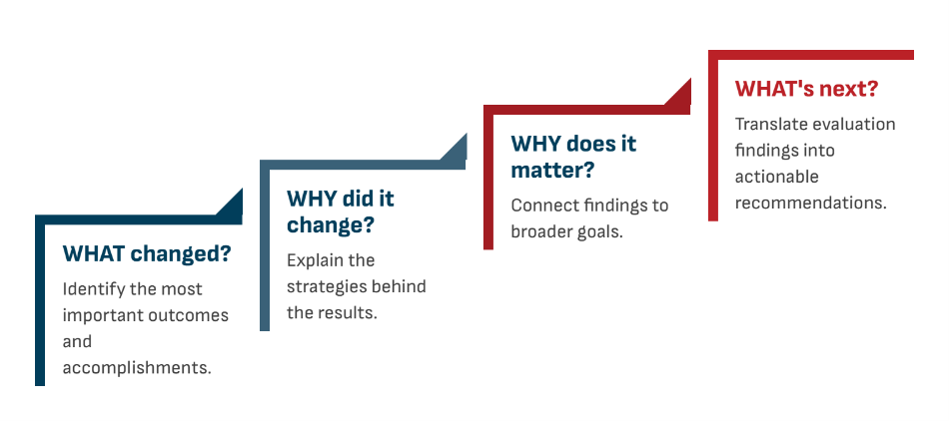
Data tell stakeholders what happened. Storytelling explains why it matters. A useful framework includes the following components:
What changed?
Identify the most important outcomes and accomplishments. For RHTP, ask:
Quantitative data establishes credibility and demonstrates measurable progress.
Why did it change?
Explain the strategies behind the results. Provide context, such as new care coordination models, provider partnerships, workforce initiatives, technology investments, and community engagement efforts.
Why does it matter?
Connect findings to broader goals. Reduced barriers to care, improved health outcomes, stronger rural health systems, and enhanced service delivery are outcomes that resonate with policymakers and funders.
What should happen next?
Translate evaluation findings into actionable recommendations.
We used this framework to support the Wyoming Statewide Strategic Housing Action Plan, which recommends policy options for improving housing supply and affordability across the state. We used a scroll-driven storytelling approach (amusingly called scrollytelling) to provide essential context on the housing shortage in Wyoming. The page first describes the background on the need, presents key data on the housing shortage and housing costs, and Wyoming’s goals for addressing the shortage. The page goes on to describe Wyoming’s existing strategies and suggests policy change to continue making housing more available. This piece is now an actionable one-stop-shop for Wyoming decision-makers at all levels: policy makers, state officials, and community members.
Storytelling is not just a communications best practice. It is increasingly embedded within program reporting expectations.
CMS' RHTP State Reporting Framework requires states to provide success story highlights that show the impact of transformation activities. States are also expected to provide updates on their sustainability plans, including efforts to maintain successful initiatives beyond the period of federal funding. Taken together, these requirements reinforce the importance of communicating current accomplishments, how they are improving health systems, and how those benefits will continue over time.
A compelling success story combines quantitative outcomes with real-world examples of how patients, providers, or communities benefited. Similarly, a strong sustainability narrative explains how successful interventions will be embedded into state systems, operational processes, funding structures, and long-term strategic plans.
For the Bureau of Primary Health Care’s Quality Improvement Fund for Maternal Health (QIF-MH), Abt created a quality improvement toolkit and sustainability planning guide. These support health centers to improve outcomes in primary maternal care delivery. As part of the toolkit, Abt highlighted one fictional health center’s maternal health innovation journey, including in-depth context about their implementation strategies, outcomes observed, and sustainability strategy. While the specific health center was fictional, the insights were drawn from the QIF-MH award recipients. The toolkit also included templates for implementation in health center settings, translating promising practices into practical, actionable roadmaps for maternal health improvements.
Ultimately, the purpose of RHTP reporting is not simply to document activities. It is to show evidence that transformation efforts are creating lasting value.
States that successfully sustain and scale programs consistently demonstrate how:
When CMS can see measurable progress, legislators can see a return on investment, and communities can see tangible improvements in care and health outcomes, evaluation findings become a catalyst for continued transformation.
Amid competing priorities and limited resources, the states that tell the strongest evidence-based stories will be best positioned to secure support, sustain successful initiatives, and deliver lasting impact for rural communities.
Ready to build an evidence story that sustains your RHTP investments? Let’s Talk

Abt Global is a Sapphire sponsor of the NAMD 2026 Fall Conference. Find our Medicaid policy and data team at Booth 122.

Abt conducted an environmental scan of CMS-approved Medicaid reentry demonstrations, comparing how states are designing their programs and navigating different correctional settings.

Stronghold Federal’s GSA MAS award gives agencies streamlined access to IT modernization, data, and systems integration services.

How explainable, human-guided AI can help Medicaid programs focus on meaningful fraud signals, reduce noise, and act earlier.

Abt supports CMS in implementing and monitoring the MAHA ELEVATE Model to build evidence on functional and lifestyle medicine approaches to manage and improve chronic disease for Original Medicare beneficiaries.

Abt Global has been awarded a seat on the Centers for Medicare & Medicaid Services’ (CMS) Research, Measurement, Assessment, Design, and Analysis 3 contract vehicle, known as RMADA 3.

Abt’s framework for evaluating rural health hubs and measuring access, coordination, population health, and system resilience.

RWHAP teams have settled the question of whether to use AI. The open question is where to start.

Through the US President's Malaria Initiative, Abt helped protect nearly 40 million people in 2025 while pioneering integrated community health campaigns that brought essential services directly to remote areas.

Abt is evaluating if new approaches to CMS’s Integrated Care for Kids (InCK) Model can improve outcomes for Medicaid-enrolled children while controlling costs.

Abt’s 60 years of federal health work help partners address today’s toughest rural health challenges – let's connect in California.