

Client Focus: The Backbone of Global Health Response
Video


BACKGROUND
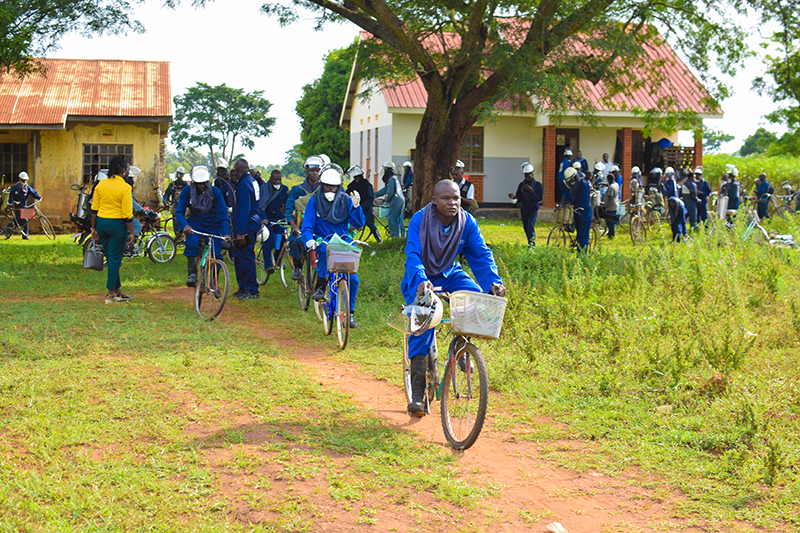
Malaria control does not pause when systems face pressure. When prevention or treatment slows, cases can rise quickly, placing families and health services at risk.
Across sub-Saharan Africa, national malaria programs must maintain consistent coverage while adapting to funding shifts, logistics constraints, and seasonal demands. Even short gaps can reverse hard-won gains.
The PMI Evolve Project, implemented by Abt, works with governments to keep malaria protection in place. The focus is practical and immediate: reach households, support frontline workers, and use data to guide decisions in real time.
WHAT WE’RE DOING
PMI Evolve supports countries to plan and deliver malaria vector control interventions at scale. The approach combines indoor residual spraying, insecticide-treated nets, and entomological monitoring into one coordinated system.
This integration helps malaria vector control programs stay effective under pressure. Data guides where to act. Digital tools track progress. National teams lead delivery and adapt strategies to local conditions. Countries also test new tools to address insecticide resistance and sustain protection. This includes new types of nets and other emerging methods that respond to changing transmission patterns.
IMPACT
Despite operational strain, PMI Evolve sustained large-scale coverage in 2025:
The work also builds stronger national systems. Programs improve how they plan campaigns, manage data, and coordinate across districts. These gains support long-term malaria control beyond a single season.
In practice: bringing lifesaving care closer to home in Uganda.
Uganda’s Ministry of Health turned a funding challenge into a smarter way to reach families: using malaria indoor residual spraying campaigns that already go door to door to bring more health services closer to home.
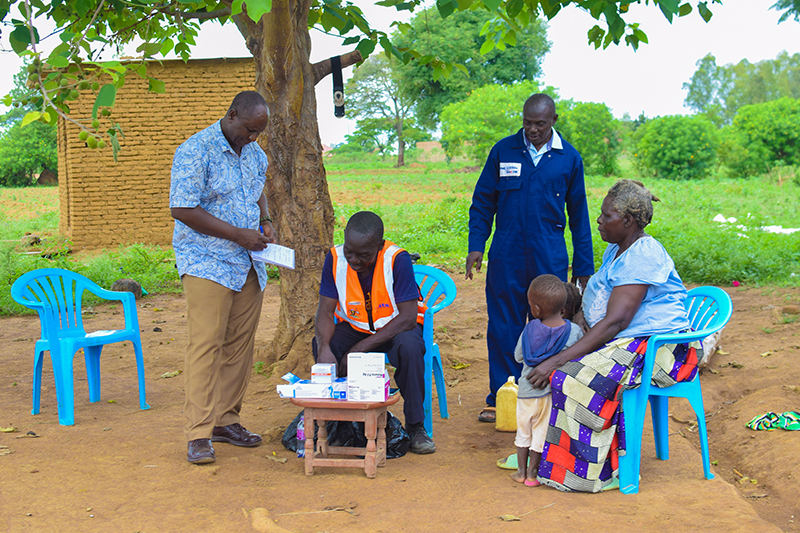
During the PMI Evolve Uganda IRS campaign across seven districts, spray teams and Village Health Teams worked together to provide integrated health services to communities, many of which are in hard-to reach areas. The teams worked together to connect households to malaria testing and treatment, along with TB/HIV screening, immunization catch-up, and other essential health services.
The reach was substantial. Through IRS, teams sprayed nearly 790,000 houses protecting over 2.7 million people from malaria. Village Health Teams tested more than 88,000 people with fever, confirmed close to 30,000 malaria cases, and ensured 90% received immediate treatment.
This approach helped Uganda extend essential health services while making better use of limited resources. By combining IRS campaigns with community-based testing, treatment, screening, and immunization outreach, the program increased the reach and visibility of both malaria prevention and frontline health services.
It also produced more precise data on malaria burden at the district level. Test positivity ranged from 23.4% in Tororo to 57.7% in Butebo, revealing local differences in transmission and risk. This level of detail can help programs target future malaria efforts more effectively and direct resources where they are needed most.
The experience highlights what is needed to sustain impact with fewer resources: integrated service delivery models, earlier commodity planning, consistent data tools, and strong support from community leadership. PMI Evolve Uganda demonstrates how IRS campaigns can serve as a practical platform for expanding access to malaria services and supporting better health outcomes over time.
WHY THIS MATTERS
Malaria control underpins everyday health for millions of families and children. Sustained progress depends on consistent prevention, timely treatment, and coordinated programming. When coverage drops, malaria can rebound quickly, increasing pressure on clinics, health workers, and communities.
PMI Evolve shows what steady, reliable delivery can achieve. Even under operational strain, programs maintained coverage and protected millions of people. Integrated delivery in Uganda strengthened that impact by turning each household visit into an opportunity to prevent illness, detect cases earlier, and connect families to care.
For governments, the priority is clear: maintain consistent prevention, ensure access to effective treatment, and use data to stay ahead of changing conditions. These actions protect people from malaria today and support healthier, more stable communities over time.
Project
PMI Evolve: Evolving Vector Control to Fight Malaria
Client
U.S. President’s Malaria Initiative, U.S. Department of State

Abt Global, through PMI Evolve, is piloting a new US-made malaria fighting technology in six African countries—now being scaled up through a new partnership with SC Johnson, the U.S. Department of State, and the Global Fund.

From partnerships to policies, Vietnam is demonstrating how countries can sustainably transition their HIV response from donor-funded to country-led.

Abt Global’s proven health systems solutions — spanning financing, efficiency, resilience, private sector engagement, and digital integration — equip partner governments to sustain health gains and transition donor-funded programs to full country ownership.

Abt Global’s proven health systems solutions — spanning financing, efficiency, resilience, private sector engagement, and digital integration — equip partner governments to sustain health gains and transition donor-funded programs to full country ownership.

Abt congratulates the United States Government and the Republic of Mozambique on signing a memorandum of understanding that marks an important step in implementing the America First Global Health Strategy.

Former Abt Global staff published a Global Health Action study on malaria case-management in the DRC, showing strong adherence to national testing/treatment guidance with clear, actionable opportunities to improve diagnostic accuracy, patient follow-up, and RDT availability.

In Mozambique, the largest transition to locally led HIV program in the world is underway.

Abt’s targeted support to national and regional institutions enables them to secure funding directly from the Green Climate Fund, making it more responsive, equitable, and effective.

Abt helped 25 countries reform their own health financing, improve access to and quality of health services, and prevent and contain disease outbreaks.