




The United States has invested billions in epidemic control, disease programs, and stronger health systems. As the U.S. Department of State’s Global Health Security and Diplomacy Strategy makes clear, the moment has come to fully transition health programs to partner countries, leveraging domestic financing and the private sector.
Protecting and extending the gains of these lifesaving programs, including the U.S. President’s Emergency Plan for AIDS Relief, or PEPFAR, depends on transitions that are politically viable, financially sustainable, and technically sound. The State Department needs a tested playbook that delivers transition — not just promises it.
Abt Global’s proven solutions support the State Department’s vision to turn transition from an exception into the norm. Our solutions span financing, efficiency, resilience, private sector engagement, and digital integration. They equip the State Department and partner governments with practical tools to execute the transition. What follows are strategies and results from our decades of work strengthening health systems—the real groundwork of every successful transition.
Financing solutions that lock in country ownership
Supporting partner governments to move donor-funded programs into domestic budgets and health insurance schemes is foundational for ensuring continuity, accountability, and ultimately, sustainability. It means U.S. dollars have catalyzed, not replaced, domestic investment.
In Zambia, the development of standard operating procedures allowed the government to better track HIV expenditures and strengthen asset and human resource management, thus increasing national capacity to manage government-to-government, or G2G, funds.
In the Democratic Republic of Congo, the Ministry of Health introduced performance-based budgeting for local health zones, tying government allocations to service delivery outcomes. Internal project reports showed that this reform increased local budget execution rates by more than 30% and created a transparent channel for tracking health expenditures, a key step toward sustaining epidemic control through domestic financing.
Efficiency models that reduce costs and increase accountability
Proven approaches to streamline service delivery, cut overheads, and improve oversight show Congress and taxpayers real value for money. Across our global portfolio, these models have helped partner governments reduce administrative costs by up to 30%, accelerate data reporting cycles from months to days, and expand access to essential services for millions.
In the Kyrgyz Republic, the Ministry of Health reorganized nurses’ workflows in primary health centers by introducing digital tools and task optimization. These reforms reduced patient wait times by nearly half and freed nurses to focus on higher-value care; the government is now institutionalizing them nationwide. Tanzania replaced paper-based reporting with interoperable dashboards, giving district officials real-time visibility into expenditures, reducing theft, and improving services.
Resilience packages for supply chains, workforce, and data systems
Catalytic, time-bound support embeds resilience into national systems, ensuring critical functions thrive long after donors depart. Abt’s partnerships accelerate transitions and fortify systems against future shocks.
Malawi’s vendor-managed inventory system cut delivery times for essential health supplies from seven months to two weeks, project reports showed. The Philippines’ Department of Health strengthened surge workforce systems, deploying digital tools to reassign health workers during outbreaks and emergencies, ensuring uninterrupted service delivery even in hard-to-reach areas. And Ukraine’s first telemedicine law enables remote consultations and continuity of care during conflict.
Private sector integration and innovative financing
When governments harness the private sector as a permanent pillar of sustainability, everyone wins. To support private sector partnerships, Abt works with governments to unlock private capital, labs, pharmacies, and insurers as part of national health strategies.
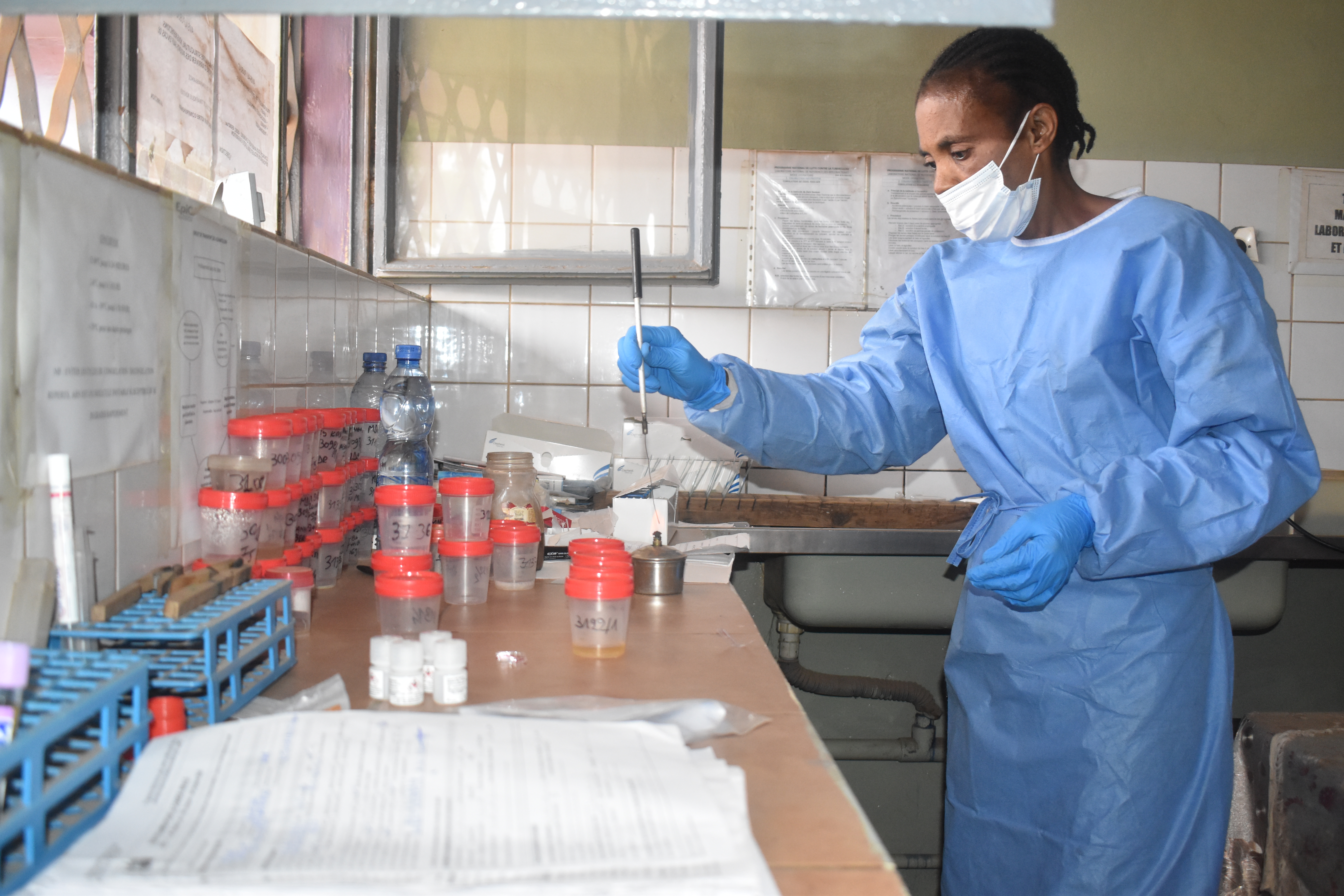
In Nigeria, contracting private labs boosted viral load coverage from 76% to 91% and cut turnaround time by three weeks, according to internal reports. In Kenya, the Maisha Meds platform linked pharmacies to insurance reimbursement systems, expanding reach while ensuring quality oversight.
Digital integration as the glue
Digital is not an add-on: it’s the backbone of country-led, interoperable systems that connect financing, service delivery, and accountability.
Cambodia built an interoperability layer that linked health and social protection systems, enabling patient tracking across services and enhancing provider efficiencies and client access. The integration reduced administrative delays, ensured that vulnerable households were automatically enrolled in coverage, and allowed the government to better target subsidies — expanding access while improving efficiency and accountability.
The Dominican Republic integrated HIV indicators into its national DHIS2 platform, putting epidemic control on the same dashboards as maternal and child health. This gave health officials real-time visibility across programs, enabling faster resource allocation and earlier detection of service gaps. It also transferred full data ownership to the Ministry of Health, allowing national analysts, not donors, to lead performance reviews and make evidence-based decisions.
Looking ahead
Transitions are already happening, as these examples show. Scaling them needs proven health systems strengthening solutions: financing road maps, leaner service models, resilience packages, private sector integration, and digital backbones.
Abt Global has strengthened health systems in more than 40 countries, helping partner governments mobilize over $2 billion in domestic health financing, expand insurance coverage to tens of millions, and integrate thousands of private providers into national networks. These digital, financial, and governance systems empower countries to sustain essential services long after donor programs end.
The State Department needs these competencies to protect its investments, demonstrate accountability, and exit — leaving behind health systems that are stronger, more resilient, and wholly owned by the countries they serve.
Figures cited in this article are drawn from unpublished annual and quarterly project reports.
A version of this blog was originally published in Devex as part of Off-Ramps to Self-Reliance, a series exploring insights on the future of HIV programming and the multisectoral solutions that support countries’ off-ramps, resilient health systems, and sustained HIV progress.
Read More
Health Systems Strengthening

Vietnam’s Playbook for a Country-Led HIV Response
From partnerships to policies, Vietnam is demonstrating how countries can sustainably transition their HIV response from donor-funded to country-led.

Transition by Design, Not Drawdown: Lessons From Mozambique
Abt Global’s proven health systems solutions — spanning financing, efficiency, resilience, private sector engagement, and digital integration — equip partner governments to sustain health gains and transition donor-funded programs to full country ownership.

Abt Forward: November 2025 Newsletter
Abt Forward: Military Families, AI Leapfrogs, Mission Impact. Explore military family resilience, AI innovations, and community impact.

Advancing Military Family Health Through the Millennium Cohort Family Study
Abt Global is a key research partner to the Department Defense and Naval Health Research Center on the Millennium Cohort Family Study

Flexible Delivery of Development Programs in Fiji
The Abt-managed Fiji Program Support Platform implements a portfolio of Australian Government-funded development programs, in alignment with Fiji's national priorities and the Australia-Fiji Vuvale Partnership.

2025 Defense Health Information Technology Symposium (DHITS)
Join Abt Global at 2025 Defense Health Information Technology Symposium (DHITS).

When Data Improves Lives: Tackling Nutrition with Better Systems
Strengthening community systems to detect malnutrition early and ensure all children in Timor-Leste have a healthy start.

Provincial Leadership Means Better Health Services in Papua New Guinea
Improved provincial financial governance is boosting health services, efficiency, and donor trust across Papua New Guinea with support from Abt.

Local Health System Sustainability Project (LHSS)
Abt helped 25 countries reform their own health financing, improve access to and quality of health services, and prevent and contain disease outbreaks.

Evaluation of Indigenous Family Wellbeing Services
Abt’s evaluation found that FWS help reduce Aboriginal and Torres Strait Islander children’s entry into the child protection system.

Strengthening Intellectual Disability Health Awareness
The Primary Care Enhancement Program pilot improved the capability of general practitioners to care for individuals with intellectual disabilities.

Cambodia’s Social Protection Program Enters the Digital Age
Abt played a key role in helping Cambodia create a network with interoperable data management systems to improve the impact of its social protection programs.