


For years, reporting data for social protection programs in Cambodia was a tedious and time-consuming process. Staff from various social protection agencies had to manually gather and report socio-economic data. This involved filling out sheets of paper with information such as client age, health status, education, family structure, household income, and housing status.
The staff would painstakingly compile data for program administrators to monitor performance and evaluate programs. The manual process required significant time and effort and was prone to errors, making it difficult to ensure accurate and timely reporting.
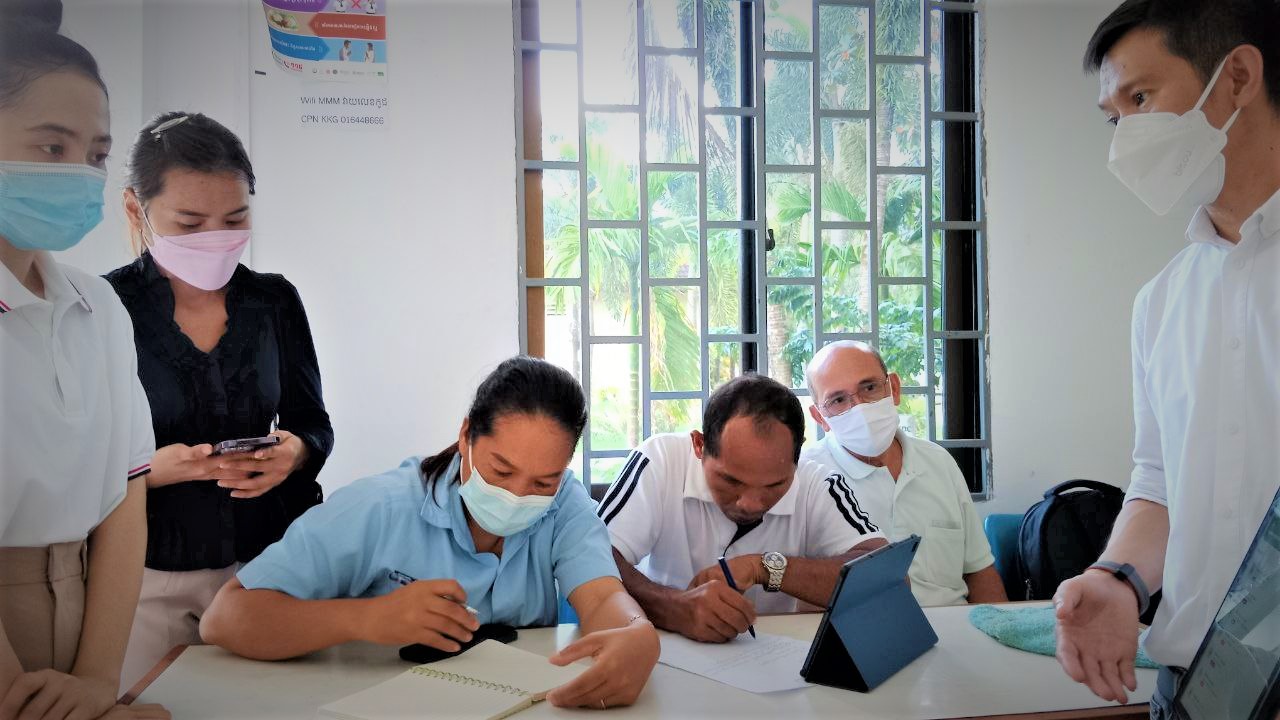
No longer. Thanks to the Abt-led, USAID-funded Local Health System Sustainability (LHSS) project, a new monitoring and evaluation (M&E) platform has transformed the system. Many data entry processes have been automated, dramatically improving efficiency and reducing the staff’s workload. The digital transformation enables smoother and more reliable data reporting, freeing up stakeholders to focus on program improvement and policy development.
LHSS worked with the General Secretariat of the National Social Protection Council (GS-NSPC) to support agencies’ efforts to establish the governance mechanisms and implementation plan that have produced a fully functioning, integrated digital platform that automates data collection, analysis, and reporting.

The platform connects GS-NSPC with the 11 ministries in the council and other stakeholders, providing a unified system that ensures everyone has access to reliable, up-to-date information. Managers can assess the performance of social protection programs, identify gaps, and plan improvements based on clear evidence.
In addition, agencies contributing data have their own customized dashboards within the system. The dashboards enable them to track information of the most interest to them and see the benefits of sharing their data with the national platform. Improved transparency fosters collaboration and stakeholder alignment toward the shared goal of improving social protection services.
The transition to the digital M&E platform marks a significant step forward for Cambodia’s social protection system. The modern tool will enable the GS-NSPC in the future to manage programs efficiently, reduce vulnerabilities, and provide targeted support to those who need it most. LHSS’s work will leave a lasting legacy of improved governance and better outcomes for the people of Cambodia.
Read More
Social & Economic Policy in Asia & Pacific

Localised Solutions to Water Security in Papua New Guinea
Locally led infrastructure and governance approaches have stabilized access to clean water, supported schools and rural markets, and built long-term community ownership.
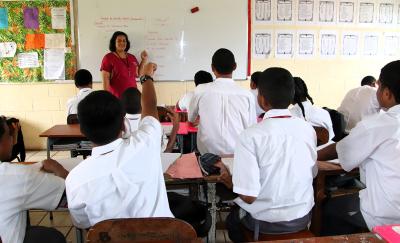
Flexible Delivery of Development Programs in Fiji
The Abt-managed Fiji Program Support Platform implements a portfolio of Australian Government-funded development programs, in alignment with Fiji's national priorities and the Australia-Fiji Vuvale Partnership.

Evaluation of Indigenous Family Wellbeing Services
Abt’s evaluation found that FWS help reduce Aboriginal and Torres Strait Islander children’s entry into the child protection system.

Strengthening Intellectual Disability Health Awareness
The Primary Care Enhancement Program pilot improved the capability of general practitioners to care for individuals with intellectual disabilities.

Assessing Oral Health Services in Victoria’s Schools
Abt evaluated the impact and outcomes of the Smile Squad initiative that provides oral health care in schools.
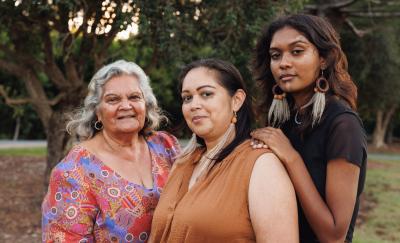
Closing the Gap Project Design in Darwin
Abt was selected to co-design a project to reduce family and domestic violence and the over representation of Indigenous children in out of home care in Darwin.

Australian Veterans’ Care Program Evaluation
An evaluation of the Coordinated Veterans’ Care Program confirmed the program’s positive impact on participants' health and satisfaction.

KOMPAK Strengthened Delivery of Core Services
KOMPAK implemented a local-level development initiative to improve basic services and economic opportunities for poor and vulnerable Indonesians.

Tajikistan: Promoting Health Responsibility by Bicycle
Through the Healthy Mother, Healthy Baby Activity, Khurshed Khojaev promotes community responsibility for maternal and child healthcare and nutrition.
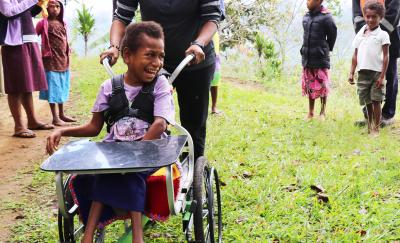
Changing Lives on the Kokoda Track through Disability Assessment Training
Abt leads the Australian Government supported Kokoda Initiative to train healthcare providers to assess people with disabilities in Papua New Guinea’s Kokoda Track region communities.

Australian Nurse-Family Partnership Program
The Australian Nurse-Family Partnership Program is a nurse-led home visiting program that supports women pregnant with an Aboriginal and/or Torres Strait Islander child.

Australian Indo-Pacific Aid post-COVID-19
This working paper outlines a five-year post-COVID 19 strategy for an aid program to serve Australia’s strategic interests. The paper focuses on policy, geography, modality and sector. All are critical to why, how, and where the aid program is designed and delivered:policy will articulate the program’s strategic goalsgeography considers the regions and countries in which to operatemodality determines the instruments and mechanisms for deliverysectors considers the different parts of the host economy most appropriate for interventions.

Pima Community College’s Pathways to Healthcare Program Three-Year Impact Report
The Pathways to Healthcare program, operated by Pima Community College and Pima County One Stop in Tucson, Arizona, helped low-income, low-skilled adults access and complete occupational training in one of five healthcare pathways. In addition, the program included academic and non-academic advising, scholarships, basic skills remediation as needed, and job search assistance. Abt’s three-year impact report found an increase in college credentials that take a year or more to earn but no impact on earnings. The program had no impact on employment overall but did increase employment in healthcare.The program was part of the Pathways for Advancing Careers and Education (PACE) Study, funded by the Administration for Children and Families (ACF).

Thinking and Working Politically in Large, Complex Aid Programs
This brief and its annexes summarize how Abt Global is testing and applying a ”thinking and working politically” (TWP) approach in its international aid programs. We use the example of the Australian Government KOMPAK program in Indonesia. We hope to add to the growing body of knowledge on what it actually takes to implement a TWP approach in large, facility mechanisms.Where evidence does exist, it focuses on small, single sector, low-profile grants, not the experience of what it takes to apply TWP in large, multi-sector, facility-style initiatives.KOMPAK is making head-way in developing, conducting trials of and refining a set of tools, systems and practices to implement TWP across the facility. KOMPAK has focused on getting teams comfortable with a more rapid cycle of thinking/ doing/ learning than in a traditional pre-planned program. Our tools try to systematize TWP across the program while allowing flexibility in how teams operate.
The Private Sector: Key to Reaching Young People with Contraception
As family planning stakeholders look to increase the use of modern contraceptive methods among young people aged 15 to 24, the private health sector presents a significant opportunity to expand access to this group. To prioritize investments in private sector strategies to reach youth, donors and governments need to understand which opportunities offer the greatest potential to reach additional young users of modern methods. This brief uses data from Family Planning 2020’s Core Indicator Estimates and Demographic and Health Surveys to model growth under a few potential scenarios.