
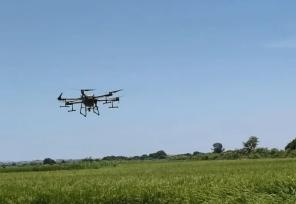
Madagascar Says No to Mosquito Breeding Sites in Rice Fields
Health experts in Madagascar used satellite data and modeling to detect mosquito-prone rice paddies, improving local malaria early warning and targeted response.
Resource


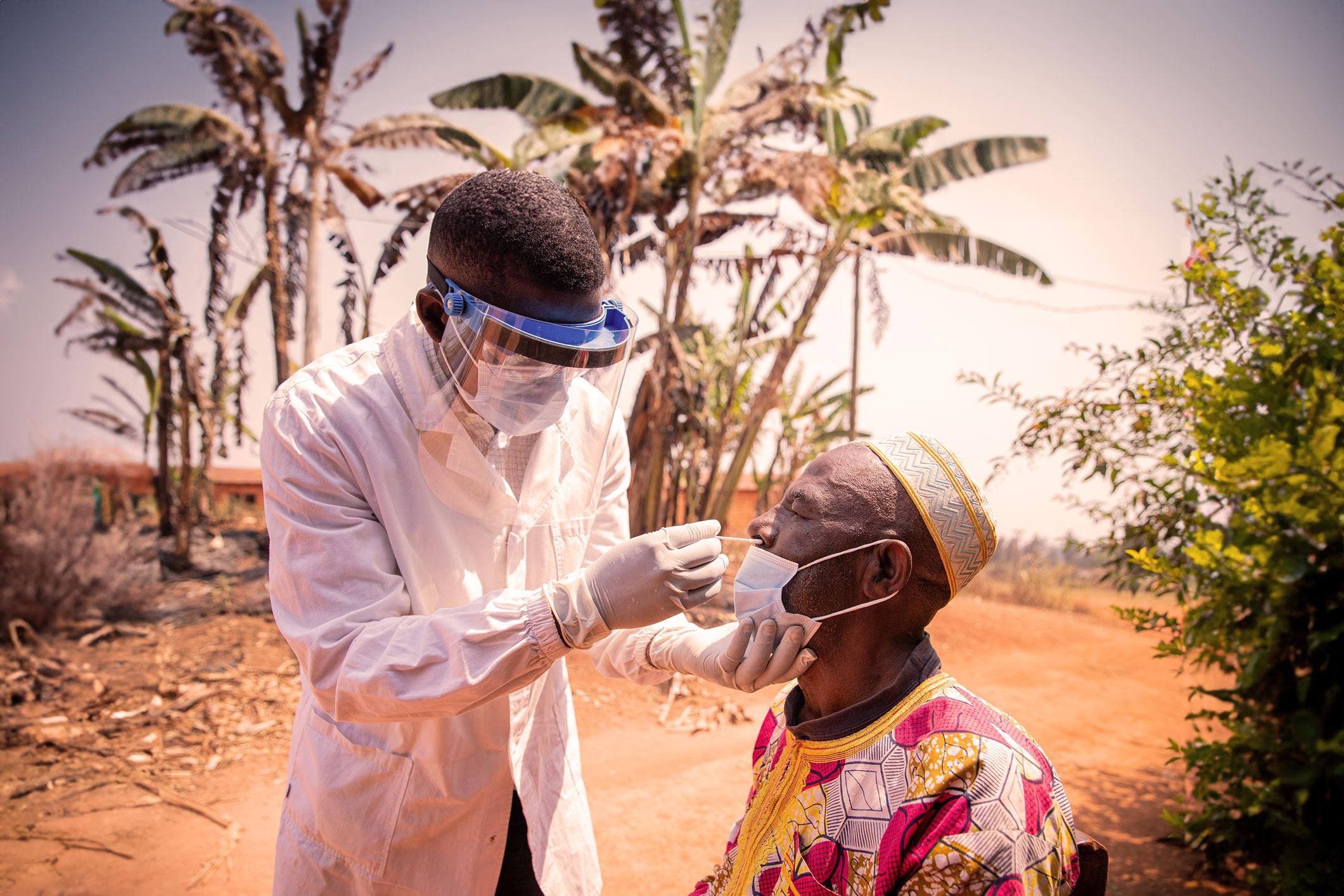
2024 has been a year of significant developments in global health security, characterized by notable outbreaks, substantial progress, and critical challenges. The world faced health crises such as Mpox, Marburg virus, Avian Influenza, and Listeria, with the Democratic Republic of the Congo identifying severe respiratory malaria cases through its improving early warning system.
Innovations in surveillance, diagnostics, and outbreak response strategies have been crucial in managing these threats, underscoring the importance of continuous learning and adaptation in our global health preparedness efforts. Amid these challenges, the Pandemic Accord saw considerable advancements and continued tensions and the US Government expanded formal partnerships from 19 to over 50 countries and mobilized support for an additional 50.
Abt Global has spent this year focused on these challenges and opportunities, working across 28 countries with national and subnational governments and dozens of local partners to implement localized prevent, detect, and respond strategies. We look forward to continuing to work alongside our partners to identify risks early and mount timely and effective responses to global health threats.
Here, we review some of our top global health security insights from 2024 as we look ahead to 2025.
In a mini-Master Class on global health security, Carolynn Poulsen, Abt’s director of global health security, examines the progression of health security and outlines strategies to enhance pandemic preparedness. Understanding the historical impact of epidemics and pandemics must inform current and future health security strategies. To strengthen pandemic preparedness, we must invest in robust health systems that can effectively prevent, detect, and respond to health threats; implement One Health approaches; enhance surveillance and data sharing; and build sustainable financing mechanisms.
From cross-border data sharing platforms to AI-driven predictive analytics, the world has an unprecedented opportunity to leverage digital innovation in health security solutions to detect outbreaks early, track disease spread and coordinate effective interventions on a global scale. A webinar on digital GHS showcased the transformative potential of emerging digital solutions for global health security and explored how the global community can safely adopt innovations.
Trusted partnerships with local innovators have enabled scaling up of locally designed solutions to global health security threats. In this film, Abt shines a light on Madagascar, where our government and community-based partners have learned from past experiences with plague response to improve their current and future response system. Reinforcing community engagement and strengthening capacity at the local level are central to addressing immediate barriers to care.
A One Health approach is critical to mitigating zoonotic diseases and strengthening health systems globally. In the Operationalizing One Health webinar, we delved into the interconnectedness of human, animal, and environmental health and highlighted field-tested strategies.

Environmental hazards require adaptive global health security strategies.

A One Health approach, which includes human, animal, and environmental health, is critical for fighting diseases passed between animals and humans.
Abt helps governments around the world enable sustainable economic growth, advance fiscal transparency and accountability, and improve service delivery.

Abt Global implements evidence-based and high-impact service delivery projects that improve health outcomes for key, disadvantaged populations around the world.

By combining technical, communications, and behavior-change expertise while applying the principles of behavioral-economics, Abt campaigns successfully encourage audiences to adopt recommended actions.

CDC’s real-time surveillance of COVID-19 cases and analyses of surveillance data inform public health policies, communication about protective behaviors, and guidance to public health and healthcare providers, communities, businesses, and schools.

As leaders focus on pandemics and global health security, they should look at three related items: other diseases, social determinants of health, and logistics.

The changing face of governance discourse due to impacts of COVID-19.

The Pathways to Healthcare program, operated by Pima Community College and Pima County One Stop in Tucson, Arizona, helped low-income, low-skilled adults access and complete occupational training in one of five healthcare pathways. In addition, the program included academic and non-academic advising, scholarships, basic skills remediation as needed, and job search assistance. Abt’s three-year impact report found an increase in college credentials that take a year or more to earn but no impact on earnings. The program had no impact on employment overall but did increase employment in healthcare.The program was part of the Pathways for Advancing Careers and Education (PACE) Study, funded by the Administration for Children and Families (ACF).

As countries work to promote and achieve Universal Health Coverage (UHC), maintaining and improving quality in health care is emerging as a priority. While research has been conducted on service delivery and financing schemes for UHC, little consolidated knowledge or guidance is available on institutional arrangements and their impact on quality of care in the context of UHC.Responding to this need, the Health Finance and Governance project (HFG) conducted a literature review to attempt to document global experience in institutional roles and relationships governing quality of care in the health sector, and to identify successful features or factors when structuring institutional roles, responsibilities, and relationships. Read the full report.

There is a growing international commitment to universal health coverage (UHC), but limited means to determine progress towards that goal. The authors developed a practical index for capturing health service coverage – a critical dimension of UHC -- that was more inclusive than previous methods.The approach moved beyond common indicators of service coverage focused on infectious diseases and maternal and child health, to include information on necessary health inputs. The resulting, balanced, composite index of health service coverage demonstrated promise as a metric, likely to discriminate coverage levels between countries and regions. An important number of service provision indicators were correlated, therefore a reduced set of services performed well as a proxy for the full set of available indicators. This parsimonious index is a start toward simplifying the task of policy-makers monitoring progress on a key domain of universal health coverage.
Many women in low-income countries cannot afford maternal healthcare services. Changamka, a Kenyan company, developed an electronic, stored-value card to help pregnant women save for maternal healthcare at a Nairobi hospital. This paper reports results from a mixed-methods process evaluation of the card's implementation. The study found high levels of uptake and identified several benefits of the program, such as facilitating payment for services. The evaluation also identified several challenges. Most users completed only one transaction before discontinuing card use; only 6% of women who acquired the card used it to pay for delivery, and slightly less than 1% used it as it was originally intended—to pay for several antenatal care visits and for delivery. According to respondents, the main reason for this discontinuation was a lack of understanding about how to use the card. Users were, on average, of a higher socioeconomic and educational status than non-card users. Most users obtained the card in their third trimester, and among those who used the card to save for delivery, most started to do so too late in pregnancy to accumulate sufficient savings to pay for that service. Copyright © 2015 John Wiley & Sons, Ltd.
Health experts in Madagascar used satellite data and modeling to detect mosquito-prone rice paddies, improving local malaria early warning and targeted response.

VMMC is an integral component of the Government of the Republic of Namibia’s prevention approach to ending HIV and AIDS. Despite significant effort, VMMC coverage remains low. The population-based self-reported circumcision rate is 36.4 percent among…

Uzbekistan has made great strides in tuberculosis (TB) control. However, the TB burden remains high, and Uzbekistan is in the top 30 countries with cases of multidrug-resistant TB. Across USAID’s reach, cure, prevent, innovate, and sustain strategic…