

Client Focus: The Backbone of Global Health Response
Video


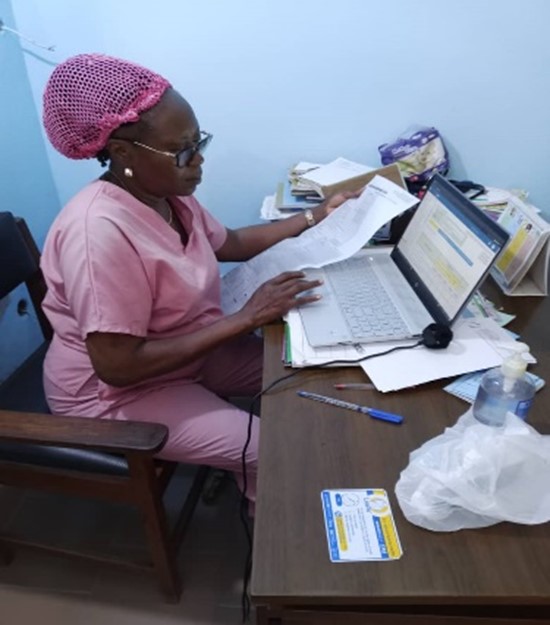
For years, Benin’s private health sector was a bit of a black hole. While use of 752 private health facilities (PHFs) has increased in recent years, data about the services they delivered went largely unreported to the Ministry of Health (MOH). That created challenges. The absence of data hampered MOH assessments of comprehensive health data trends. And that created barriers to informed decisions and implementation of needed changes.
Aggravating matters, the data collection tools didn’t accommodate some reproductive, maternal, neonatal, and child health (RMNCH) indicators. So, the information couldn’t show up on the dashboard for DHIS2, a software platform more than 75 countries use to collect, report, analyze, and disseminate data.
Then in 2018, the USAID-funded Private Sector Health Partnership Activity (PSHPA) stepped in. The project trained private providers on how to fill in National Health Management and Information System (NHMIS) tools, which feed data into DHIS2. PSHPA also conducted quarterly DHIS2 data quality control audits to help integrate and validate private sector data.
This collaborative effort involved close coordination with and training of health zone data managers, who report directly to the director for health statistics in the MOH Department of Programming and Foresight. These measures ensured a unified approach and regular reviews of the data that the private sector collected. When the MOH combined the data with public sector data, it had a comprehensive view of the healthcare landscape and could make more informed, evidence-based decisions.
Over the course of the project, which ended in 2023, PSHPA procured and distributed 4,000 health data registers to PHFs in all regions of Benin and helped increase the completeness of PHF data from 15% to over 100% of the target. PSHPA supported the NHMIS’s revision of RMNCH data collection and development of the DHIS2 RMNCH Dashboard. It also provided three servers to help ensure MOH intranet connectivity to facilitate data storage and the ability to conduct training without internet.
Since 2020, the Minonkpo Clinic in Avotrou has embraced these changes, recording consistent, complete, and timely data directly into DHIS2. All thanks to PSHPA. The project “is a valuable partner,” says Agbobli Rebecca, a state midwife at the Minonkpo Clinic in Cotonou. She notes that PSHPA not only improved data quality but also implemented emergency neonatal obstetric care protocols. The project’s impact thus is not just better data for decision-making. It also helps save newborns’ lives.

Through the US President's Malaria Initiative, Abt helped protect nearly 40 million people in 2025 while pioneering integrated community health campaigns that brought essential services directly to remote areas.

Abt Global, through PMI Evolve, is piloting a new US-made malaria fighting technology in six African countries—now being scaled up through a new partnership with SC Johnson, the U.S. Department of State, and the Global Fund.

From partnerships to policies, Vietnam is demonstrating how countries can sustainably transition their HIV response from donor-funded to country-led.