



HIGHLIGHTS
- Keeping EPA’s eGRID updated is critical for policymaking
- Abt continues to develop the eGRID tool, which tracks air pollution emissions rates.
- Governments and others use the data to understand current emissions and estimate the impacts of emission reduction strategies.
The Challenge
The Environmental Protection Agency’s (EPA) Emissions & Generation Resource Integrated Database (eGRID) is the preeminent source of data on the environmental characteristics of electric power generated in the United States. It’s based on available plant-specific data for all U.S. electricity-generating plants that provide power to the electric grid and report data to the U.S. government. As user needs grow, EPA must keep the emissions data current, accessible, and easy to understand and use.
The Approach
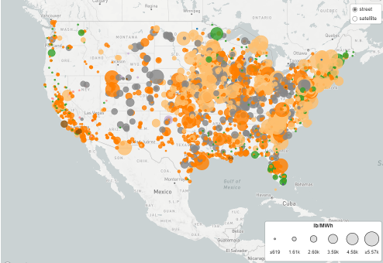
Abt has helped EPA produce eGRID since 2012. We conducted extensive stakeholder outreach to guide the design of new electricity-generation emissions-rate models and interactive dashboards. Abt also helped create interactive tools, including the eGRID Data Explorer which replaced static tables with an interactive interface, and Power Profiler, so users can move from raw data to clear, location-specific information.
The Results
Abt’s work has made eGRID faster to produce, less costly, and easier to use. By automating data analysis and quality checks, Abt cut production time by 50%, from 24 months to under 12 months. Production costs also fell by 85%. These gains help EPA provide more timely, accessible data on power generation, fuel mix, and emissions. For example, thanks to these innovative efforts, it is now possible to release eGRID data on an annual basis. Users can apply the data to analysis, planning, reporting, and research with confidence that it is timely and credible.
Read More
Air Pollution & Air Quality

Spotlight On: Digital Solutions for Environment and Natural Resources
We combine topical expertise, environmental science, data analytics, & engineering to help agencies modernize systems & use data to support better decisions.

Regulating Harmful Contaminants for Healthier Communities
Abt supported the EPA in developing and implementing data-driven regulations for hazardous chemicals—particularly carbon tetrachloride—helping turn scientific evidence into enforceable protections that reduce risks to workers, nearby communities, and the environment.

SOT Annual Meeting and ToxExpo 2026
Abt helps translate complex toxicology and exposure science into usable insights that support policy, programs, and public health action.

Addressing Cumulative Air Pollution in Massachusetts
Supporting Massachusetts in developing cumulative impact analysis and protective air permitting tools.

New York’s Bold Climate Plan Approved After Abt Analysis
Abt’s analysis of New York State’s climate act found it would provide $170 billion in health benefits, helping the plan earn approval for implementation.

Spotlight On: Methane
Abt provides technical assistance to stakeholders to advance methane mitigation and capture strategies across countries and sectors.

Spotlight On: Regulatory Development Support
For more than 35 years, Abt has delivered extensive regulatory support services to state and federal clients, including the Environmental Protection Agency, Department of Transportation, Department of Health and Human Services, Department of the Interior, Coast Guard, and Occupational Safety and Health Administration.

ZIP Code-Level Estimation of Air Quality and Health Risk Due to Particulate Matter Pollution in New York City
Abt helped design the ZAPPA tool so New York City could evaluate the potential impacts of proposed environmental polices, down to the neighborhood level.

Better Insight on Methane Emissions with SWEET Tool
Having graduated from EPA’s peer review process, the Abt-designed SWEET tool has been updated to better identify and resolve methane emissions.

The Policy Maker’s Handbook for Measurement, Reporting, and Verification (MRV) in the Biogas Sector
On behalf of the Global Methane Initiative, Abt helped the U.S. Environmental Protection Agency develop a handbook to assist with accounting for methane emissions and emissions reduction.

Potential Health Benefits of Sustained Air Quality Improvements in New York City
This study finds New York City’s shutdown during COVID-19 suggests how thousands of lives and billions of dollars could be saved through improved air quality.
Air Pollution and Children’s Health
THE NEW YORK TIMES: The NYT’s latest climate newsletter highlights a new journal article identifying how the Regional Greenhouse Gas Initiative, which works to reduce greenhouse gas emissions from power plants in the Eastern United States, has notable health benefits for children in these regions—notably, preventing asthma, preterm births, autism, and low birth weight— while providing savings of up to $350 million. Abt conducted one of the first studies to investigate the public health benefits of this initiative, and helped lead the new study.