


Homelessness Response
Communities are under growing pressure to address unsheltered homelessness in ways that improve access to services and housing, public safety, and measurable results. Abt’s decades of research and technical expertise on homelessness enables us to offer our clients solutions that emphasize accountability, performance, and effective client pathways alongside best practices for addressing encampments. Abt helps federal, state, and local partners strengthen homelessness response systems with rigorous research, impactful technical assistance, and data tools that support sound decision-making. We produce national and local estimates of homelessness, evaluate what works and what it costs, and help agencies and providers improve program delivery—from outreach and shelter operations to rehousing and stabilization. Our focus is practical implementation: well-coordinated homelessness response systems, quality data, strong accountability, and demonstrable outcomes.
Clients Include
U.S. Department of Housing and Urban Development (HUD)

Family and Youth Services Bureau (FYSB)

Veterans Affairs

State of Colorado Department of Local Affairs

California Department of Social Services

United Way of Massachusetts Bay

Washington State Department of Commerce

Hilton Foundation
Our Work

Since 2007, data collection, analysis and reporting to produce the nation’s estimates of sheltered and unsheltered homelessness to the U.S. Congress

Best practices for emergency housing for populations with complex needs drawn from our evaluation of California’s Project Roomkey
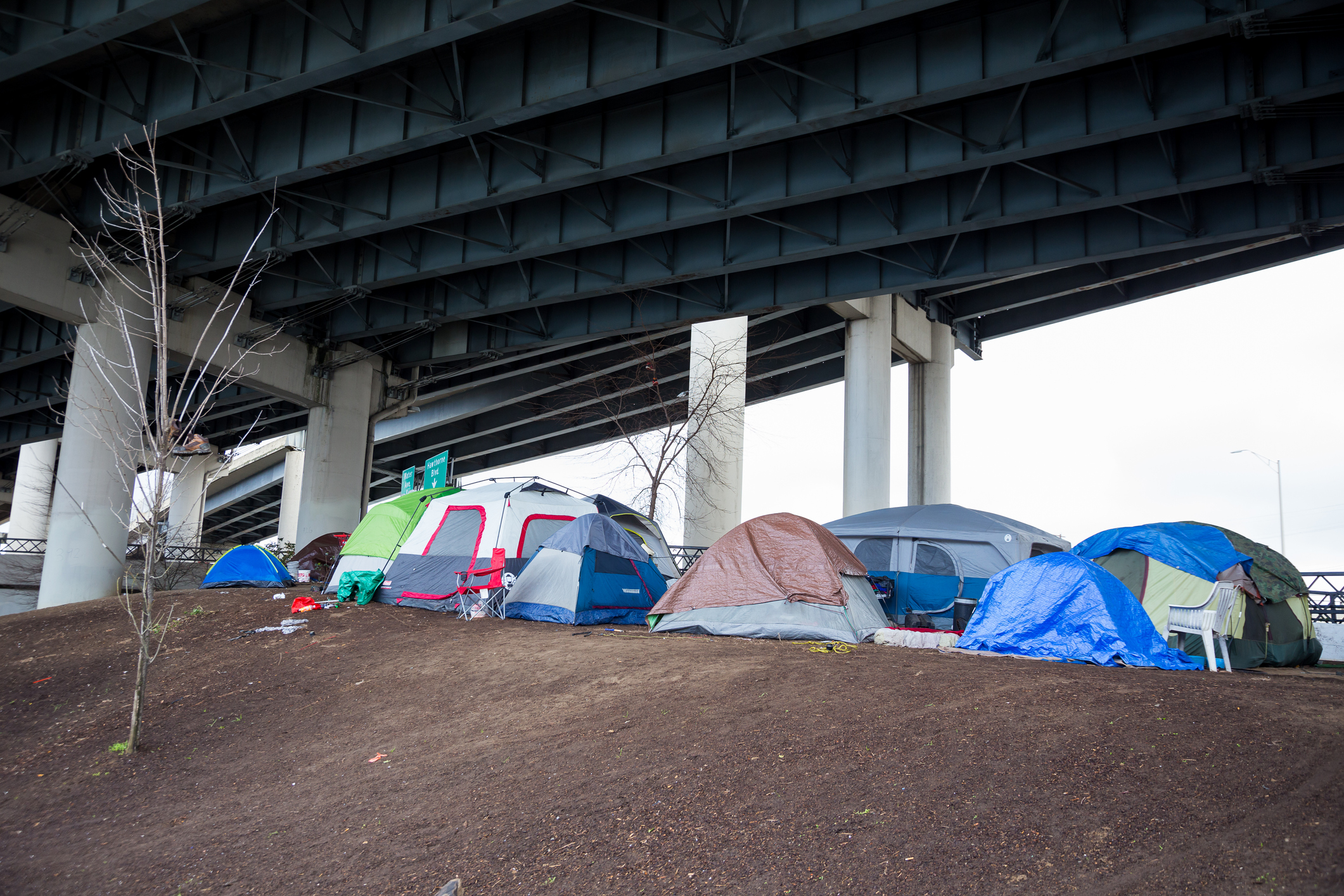
Study on homeless encampments and costs and potential cost offsets for federal, state and local policymakers and practitioners to address them

Findings that long-term housing subsidies prevent family homelessness and reduce food insecurity, schooling instability, and domestic partner violence

HHS wants TANF programs to better identify, assess, and serve homeless families. Abt helped HHS understand how TANF agencies across the country are serving families. The project produced four policy briefs documenting how TANF agencies are using TANF funds to support families currently or at risk of experiencing homelessness.

HHS wanted Abt’s help to connect homeless families to benefits. Abt produced 10 research briefs addressing homelessness and families. The Research Briefs project dove deeper into previous Abt research.

Our Experts






Insights

City Approaches, Strategies and Costs of Responding to Homeless Encampments
Abt Global conducted this study to help policymakers and practitioners understand strategies and associated costs for responding to homeless encampments.
Publication

Project Roomkey Evaluation Final Report
Abt’s evaluation of California’s Project Roomkey found this COVID-19-specific solution for people experiencing homelessness has broader applications.
Publication

Family Options Study: Three-Year Impacts of Housing and Services Interventions for Homeless Families
The U.S. Department of Housing and Urban Development undertook the Family Options Study to gather evidence about which types of housing and services programs work best for homeless families. The study examines the effects of three types of programs—permanent housing subsidies, community-based rapid re-housing, and project-based transitional housing—compared with one another and with the usual care available to homeless families. From September 2010 through January 2012, 2,282 families enrolled in the Family Options Study across 12 communities after spending at least 7 days in emergency shelter.After providing informed consent and completing a baseline survey, the families were randomly assigned to one of four groups:(1) SUB, in which families have priority access to a permanent housing subsidy;(2) CBRR, in which families have priority access to community-based rapid re-housing;(3) PBTH, in which families have priority access to project-based transitional housing; or(4) UC, in which families have access to usual care homeless and housing assistance but do not have priority access to any particular program.Families were free to take up the program to which they were offered priority access or to make other arrangements, so each group used a mix of programs. This report presents the analysis of the 3-year impacts of the three interventions in five domains related to family well-being: (1) housing stability,(2) family preservation,(3) adult well-being,(4) child well-being, and(5) self-sufficiency. The report also describes the relative costs of the interventions based on program use during the 3-year follow-up period.
Publication
Prevention Programs Funded by the Homelessness Prevention and Rapid Re-Housing Program
The Homelessness Prevention Study documented the first-ever large-scale implementation of homelessness prevention efforts—the prevention programs funded by the Homelessness Prevention and Rapid Re-housing Program (HPRP). Launched in 2009 to help American families survive a deep recession, HPRP distributed $1.5 billion in grant funding to 535 states, counties, cities, and U.S. territories; approximately 2,500 other entities, mostly direct service providers, were subgrantees. This report describes communities’ experiences with HPRP prevention programs and draws lessons for future efforts to prevent homelessness. It also identifies gaps in knowledge needed to support future policy development. As such, this report offers useful information to practitioners, researchers, and policymakers interested in homelessness and the prevention of homelessness.Read case studies from this evaluation.
Publication

TANF Support for Families Experiencing Homelessness
This report explores the ways the Temporary Assistance for Needy Families program supports families experiencing homelessness and recommends some changes.
Publication

Assisting Families Experiencing Homelessness with TANF Funding: Findings from a Survey of TANF Administrators
This brief covers methods that TANF agencies can use to identify and provide housing services to families experiencing homelessness.
Publication

Approaches to Assisting Families Experiencing or At Risk of Homelessness with TANF Funds
On behalf of OPRE, Abt assessed the use of TANF funding by state agencies to supporting housing for families experiencing homelessness.
Publication

Investigating Housing Models for Accelerating PSH Production Final Report
Abt evaluated two different programs in Los Angeles to support the creation of permanent supportive housing and found some promising approaches.
Publication
Understanding Encampments of People Experiencing Homelessness and Community Responses
This report documents what is known about homeless encampments as of late 2018, based on a review of literature produced thus far by academic and research institutions and public agencies, and supplemented by interviews with key informants. This paper is part of a larger research study sponsored by the U.S. Department of Health and Human Services, Office of the Assistant Secretary for Planning and Evaluation, and the U.S. Department of Housing and Urban Development, Office of Policy Development and Research. The goal is to contribute to our understanding of homelessness, including the characteristics of homeless encampments and the people who stay in them, as well as local ideas about how to address encampments and their associated costs.
Publication

Project Roomkey Helped Vulnerable, Homeless Californians at COVID’s Peak — and Continues To Serve As an Effective Emergency Housing Model
Abt’s evaluation found California’s Project Roomkey helped homeless Californians at COVID’s peak — and it could serve as an effective emergency housing model.
News