


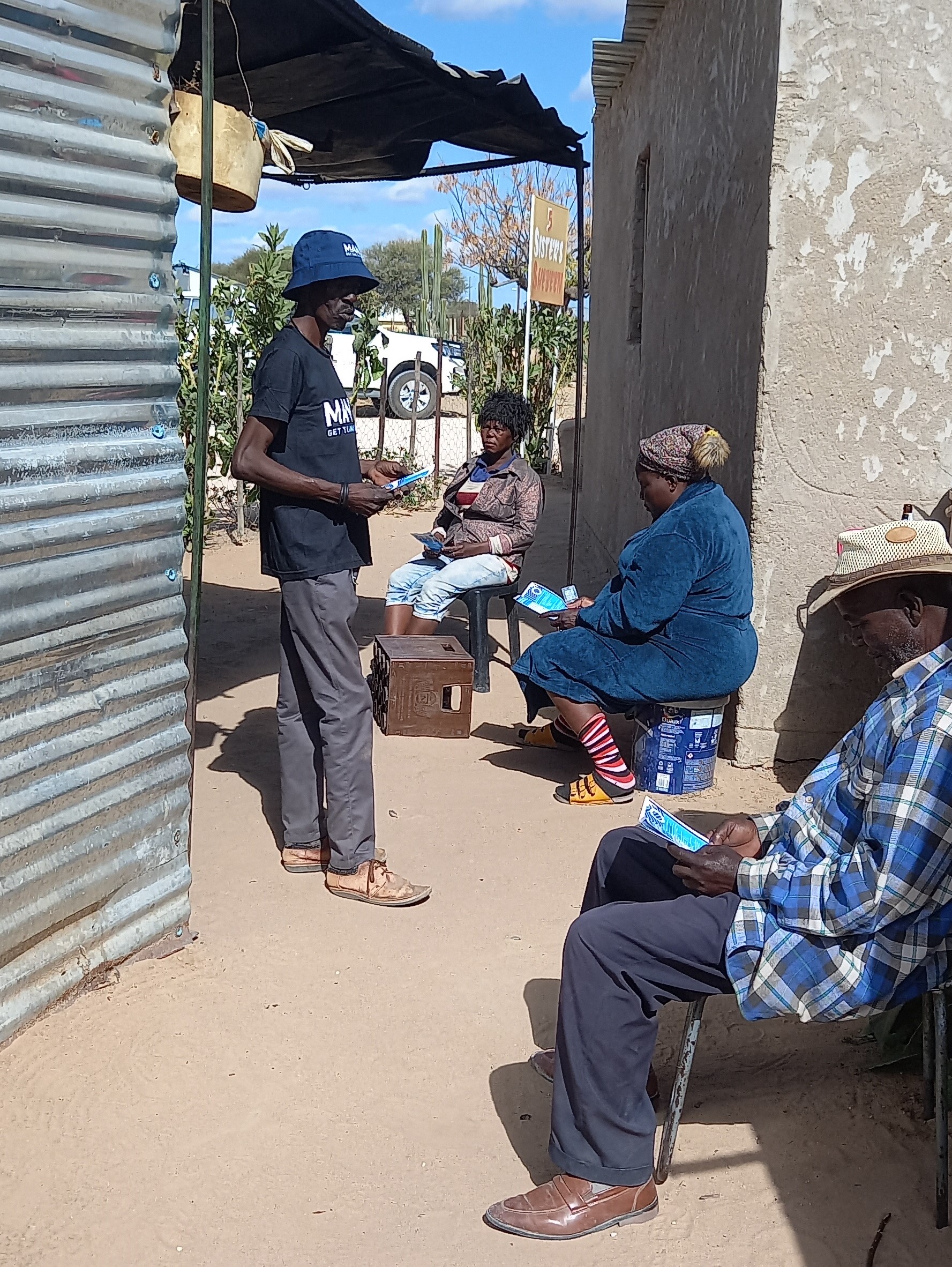
Health messages play a crucial role in increasing demand for health services and letting people know where to get them. That’s where Namibian Norich Uararakana Kaurika comes in.
The 44-year-old part-time farmer and traditional practitioner of male circumcision is a respected member of the Herero community from the Otjozondjupa region and a community mobiliser for the Abt Global-led Scaling up Access for Expanded (SAFE) voluntary male medical circumcision (VMMC) Activity. Kaurika shares educational, accessible messages about VMMC and how to obtain the procedure. And he offers his community another important and persuasive message: that circumcision is a rite of passage for young men. Circumcision “is no longer just a traditional practice,” he told The Namibian, a local newspaper that profiled him, “but a crucial national HIV prevention strategy."
Trusted community leaders like Kaurika are important sources of information about healthy behavior and healthcare services. So are social media platforms. Abt uses both approaches in SAFE to raise awareness, refute myths, and allay concerns that people have about their health needs.
Kaurika received training from SAFE about the health benefits of VMMC and how clients can access the service at private and public health facilities. It’s one of numerous tasks that are part of SAFE, the flagship project funded by the U.S. Agency for International Development and the U.S. President’s Emergency Plan for AIDS Relief.
The project helps the Ministry of Health and Social Services increase uptake of safe, high-quality VMMC services. Since 2019, Abt has implemented SAFE in 12 priority regions, targeting adolescent boys and men, aged 15 to 29 years. We use a mix of public-private approaches to promote healthy behavior and reduce the spread of HIV and AIDS.
The ManUp Virtual VMMC Campaign, another SAFE effort, works with private sector partners to use social media to promote VMMC and other components of Namibia’s HIV and AIDS prevention strategy. Spurred by limited face-to-face interaction during a three-month COVID-19 pandemic lockdown in 2021, ManUp turned to private digital platforms to encourage men to reduce risk of HIV infection by obtaining VMMC and get COVID-19 vaccination. It creates innovative, engaging material built on its slogan, “The Time is Now,” comprising posters, facts, competitions, and information on how to book appointments.
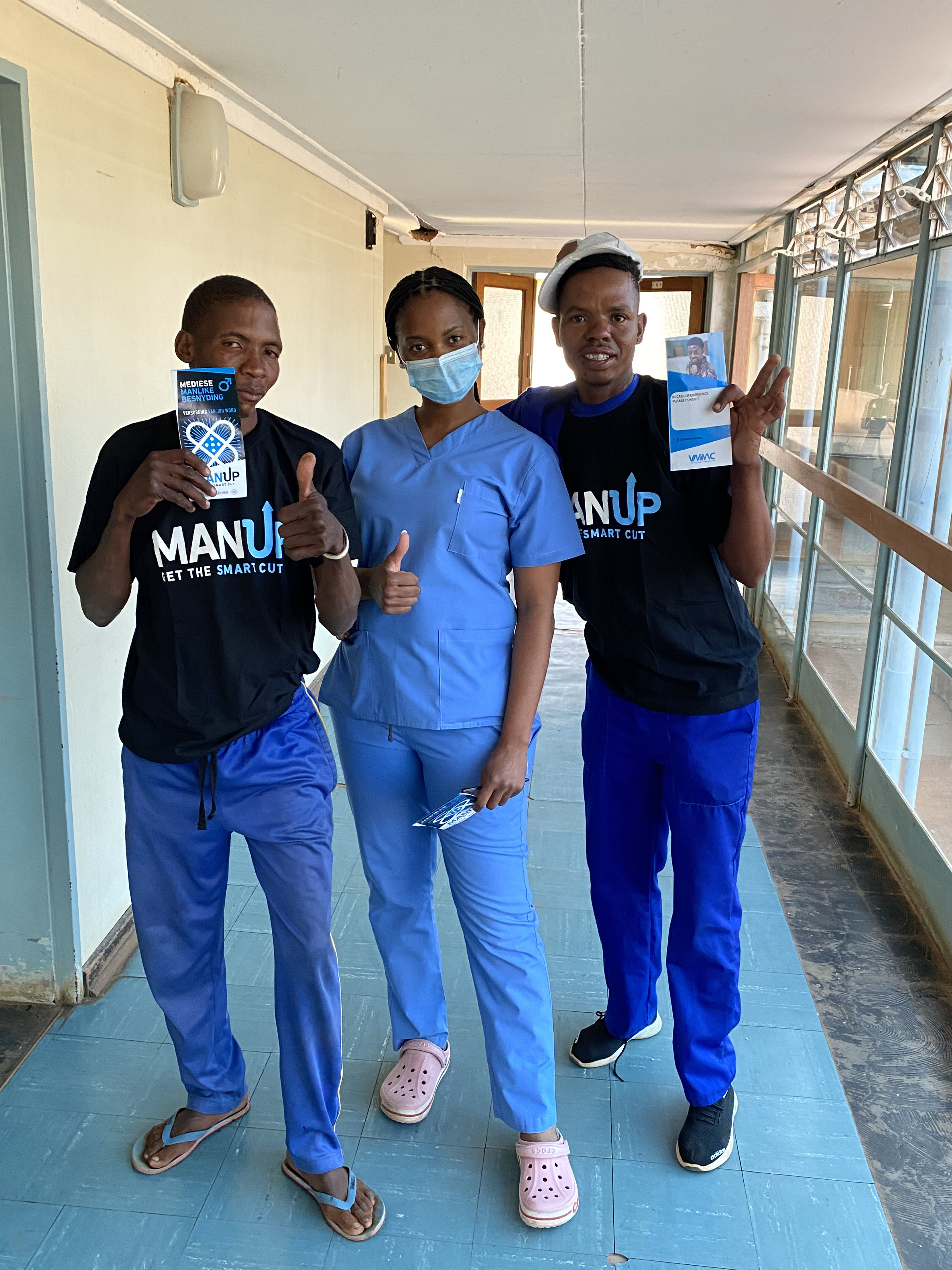
Every day, the campaign shares a new VMMC Facebook and Instagram post designed to reach target audiences segmented by age and gender. The social media posts include the names and locations of mobile outreach service delivery locations, VMMC FAQS, tips on post-operative care, and client testimonials that encourage others to consider VMMC. The campaign complements other SAFE initiatives to improve quality of VMMC services at contracted private health providers.
As part of the project, Abt also introduced a new online appointment system to reduce waiting time for clients and provide convenient access to VMMC. The system offers appointments at public facilities and helps direct clients to private facilities when they may be more suitable for client needs (e.g., for a more flexible appointment time or a certain location).
While still limited, social media campaigns like Abt’s in ManUp hold promise to complement in-person and other traditional forms of outreach. And they reach large numbers of people efficiently and effectively under large scale public-private health initiatives. Results from the three-month campaign showed a high conversion rate – the percentage of people who engaged in the campaign who subsequently scheduled an appointment for VMMC – of nearly 60%. That’s about 30 points higher than conversion rates typically achieved by other initiatives.
Read More
Private Sector Health in Sub-Saharan Africa

Bolstering Global Health Security in a Changing Environment
Environmental hazards require adaptive global health security strategies.

Beyond COVID-19: What Global Health Security Will Look Like
As leaders focus on pandemics and global health security, they should look at three related items: other diseases, social determinants of health, and logistics.

Engaging Private Health Providers to Extend the Global Availability of PMTCT Services
The past decade has seen tremendous progress in making services to prevent mother-to-child transmission of HIV (PMTCT) more available in many HIV high-prevalence settings. Despite this progress, new HIV infections among pregnant women, newborns, and infants remain unacceptably high, and AIDS remains one of the leading causes of death among women of reproductive age and infants worldwide.To eliminate mother-to-child transmission, HIV programs are increasingly seeking ways to engage private actors more fully in expanding and sustaining national HIV and PMTCT responses. This technical brief presents options for engaging private sector actors in rapidly extending the availability of PMTCT services. The discussion includes successes, lessons, and challenges that can inform the efforts of governments, donors, and implementers to adapt or replicate private sector models in new settings.Abt staff members contributed to the report, including Senior Associate James J. White, Senior Analyst Sean Callahan, Associate Analyst Samantha Lint, and former Abt Analyst Helen Li.
Providing Free Pregnancy Test Kits to Community Health Workers Increases Distribution of Contraceptives: Results from an Impact Evaluation in Madagascar
To improve access to contraceptives in remote and rural areas, sub-Saharan African countries are allowing community health workers (CHWs) to distribute hormonal contraceptives. Before offering hormonal contraceptives, CHWs must determine pregnancy status but often lack a reliable way to do so. We assessed the impact of giving CHWs free pregnancy test kits on the number of new clients purchasing hormonal contraceptives from CHWs.We implemented a randomized experiment in Eastern Madagascar among CHWs who sell injectable and oral hormonal contraceptives: 622 CHWs were stratified by region and randomly assigned at the individual level. Treatment-group CHWs were given free pregnancy tests to distribute (n analyzed=272) and control-group CHWs did not receive the tests (n analyzed=263). We estimated an ordinary least squares regression model, with the monthly number of new hormonal contraceptive clients per CHW as our primary outcome.We find that providing CHWs with free pregnancy test kits increases the number of new hormonal contraceptive clients. Treatment-group CHWs provide hormonal contraceptives to 3.1 new clients per month, compared to 2.5 in the control group. This difference of 0.7 clients per month (95 percent CI 0.13–1.18; p=0.014), represents a 26 percent increase.