


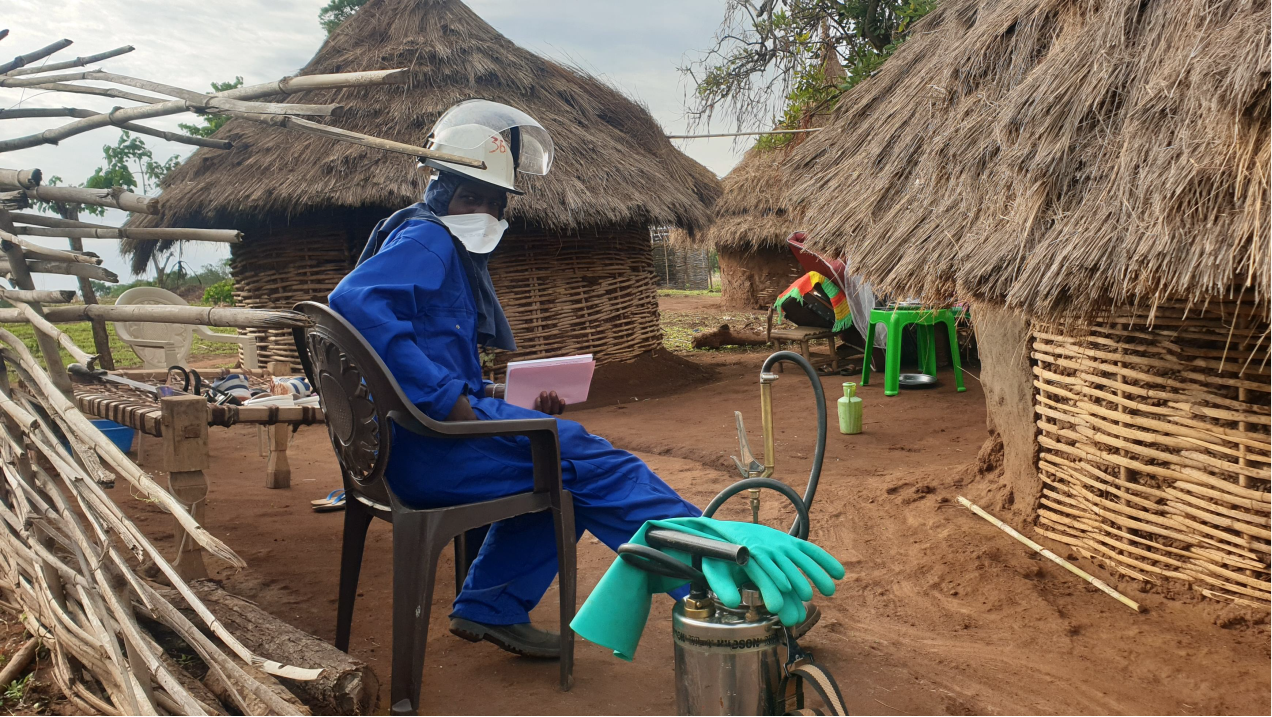
In the face of the COVID-19 pandemic and security challenges, malaria prevention is as crucial as ever. The U.S. President’s Malaria Initiative (PMI) VectorLink Project supports countries that carry out indoor residual spraying (IRS) and distribute insecticide-treated nets (ITNs) to kill malaria-transmitting mosquitoes. Recurring conflict in Mali led to challenges in preparation for the 2021 IRS campaign. Meanwhile, Ethiopia’s unstable security situation caused delays or suspension of IRS operations in impacted districts. To be effective, IRS spray coverage needs to reach at least 85% of the targeted structures. Despite the challenges, PMI VectorLink Mali and Ethiopia demonstrated grit and flexibility, enabling both teams to complete their IRS campaigns with high spray coverage.
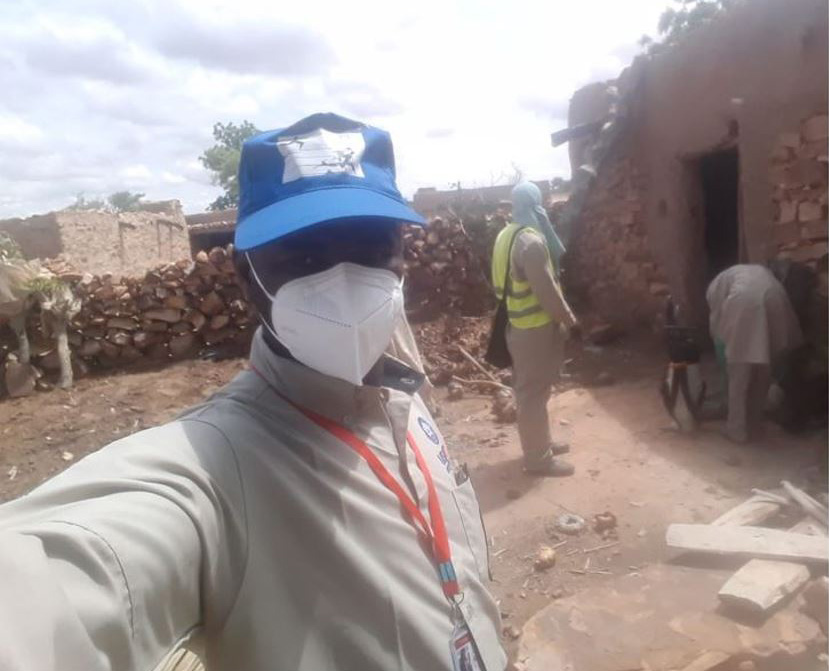
In Mali, the PMI-supported IRS campaigns are in the Mopti region. This region has security conditions that make certain target communities inaccessible to non-residents. In preparation for an IRS campaign, the Environmental Compliance Officer (ECO) must inspect and rehabilitate all operations sites using a mobile checklist prior to the delivery of insecticide to the site.
Due to the security conditions in the Mopti region, PMI VectorLink Mali’s ECO worked closely with the nurse in charge of the health post for the area to remotely conduct the inspections and take requisite photos for both initial and final pre-season environmental compliance assessments (PSECAs). The nurse led the site rehabilitation with guidance and recommendations from the ECO every step of the way. Using pictures, they had daily discussions to ensure adequate quality. As a result, the PMI VectorLink Mali team was able to obtain the authorization to deploy insecticide on time in all 19 operations sites.
In Ethiopia, the first two of three phases of PMI VectorLink’s 2021 IRS campaign occurred in areas with recurrent ethnic conflicts. That resulted in postponing or suspending operations in those phases in 14 out of 42 districts. In nearby districts, the IRS campaign experienced minor delays due to rental vehicle drivers’ hesitancy to travel to these volatile areas. The PMI VectorLink team went to extraordinary lengths to arrange transportation using locally available resources in some districts. It also changed the IRS implementation model from district-based to community-based in others to prioritize community ownership and minimize travel. Despite these setbacks, PMI VectorLink in collaboration with dedicated local partners managed to start operations in all districts within a few days of the scheduled start date.
The success of the first two phases is a glowing testament to the mutual trust and confidence PMI VectorLink built with regional and district health bureaus, which enabled the team to pivot to community-based IRS where needed, engage local (Kebele) administrations and health extension workers (HEWs), and protect as many people as possible from malaria. When the national election date shifted from June 5th to June 21st, the team shifted IRS operations, too. The plans for phase three (which included six new IRS districts in a new region) were designed in a flexible manner in anticipation of possible election-related interruptions. The team was able to adapt the activity schedule with minimal disruptions.
Communities that are inaccessible due to security challenges tend to be the most vulnerable to malaria. Working with local partners, such as the nurse in charge of the health post in Mali and the local administrations and HEWs in Ethiopia, enables malaria prevention services to be delivered to those who need protection against malaria the most.
Read More

Bolstering Global Health Security in a Changing Environment
Environmental hazards require adaptive global health security strategies.

Beyond COVID-19: What Global Health Security Will Look Like
As leaders focus on pandemics and global health security, they should look at three related items: other diseases, social determinants of health, and logistics.

Improving Immunization Programming in Mozambique
An analysis of Mozambique’s 2015 immunization spending reveals that despite adequate resources and increases in immunization coverage, challenges to the immunization program persist. In addition to examining the efficiency of the immunization program, Mozambique would benefit from efforts to report and compile immunization spending data more effectively.This policy brief and the underlying health accounts exercise have been supported by Abt Global, through a grant secured from the Bill and Melinda Gates Foundation.Also available in Portuguese.

A Concise, Health Service Coverage Index for Monitoring Progress Towards Universal Health Coverage
There is a growing international commitment to universal health coverage (UHC), but limited means to determine progress towards that goal. The authors developed a practical index for capturing health service coverage – a critical dimension of UHC -- that was more inclusive than previous methods.The approach moved beyond common indicators of service coverage focused on infectious diseases and maternal and child health, to include information on necessary health inputs. The resulting, balanced, composite index of health service coverage demonstrated promise as a metric, likely to discriminate coverage levels between countries and regions. An important number of service provision indicators were correlated, therefore a reduced set of services performed well as a proxy for the full set of available indicators. This parsimonious index is a start toward simplifying the task of policy-makers monitoring progress on a key domain of universal health coverage.