


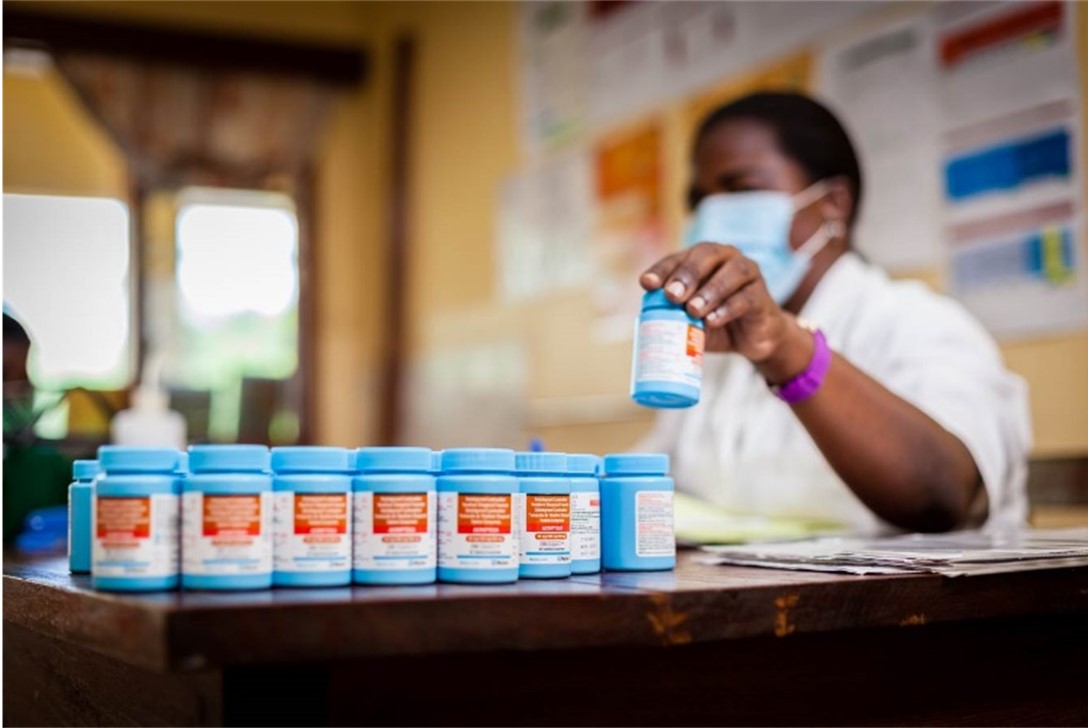
When COVID-19 hit Mozambique, it aggravated demands on already overburdened health facilities. To reduce long queues, Mozambique rolled out a novel scheme. But it didn’t target patients with the novel virus.
For years, HIV-positive patients had crowded clinics when they stopped by to pick up their monthly medications. With the COVID-19 pandemic as a catalyst, the Abt-led Efficiencies for Clinical HIV Outcomes (ECHO) project, funded by the U.S. Agency for International Development, worked with the Mozambican Ministry of Health on a simple change: give people medication for three months instead of one. The policy change also cut the time that a patient must be on antiretroviral therapy (ART) before becoming eligible for this multi-month drug distribution (MMDD) program and eliminated the need for laboratory tests to verify eligibility. That cut the number of visits by HIV-positive patients by 25 percent.
A later switch to six-month supplies meant a total reduction in visits of 83 percent a year. Communities were receptive to the change. Enrollment in the six-month program in Tete skyrocketed from 172 to 17,112 in about eight months.
Fewer trips to the clinics were not the only benefit. After just a few months of implementing the changes, ART adherence shot up and the number of dropouts plummeted to record lows. In early 2020, for example, three-month retention was just 78% in Tete province and 70% in Niassa. By July 2022, that figure shot up to 99% in Tete and 96% in Niassa. Both provinces also saw steep drops in patients leaving treatment. In a single quarter, the number plunged 94 percent, from 10,210 to 632, in Tete, and 70 percent, from 2,175 to 648, in Niassa. More patients staying on treatment means more people living happy, productive, and healthy lives with a greatly reduced chance of passing HIV to others.
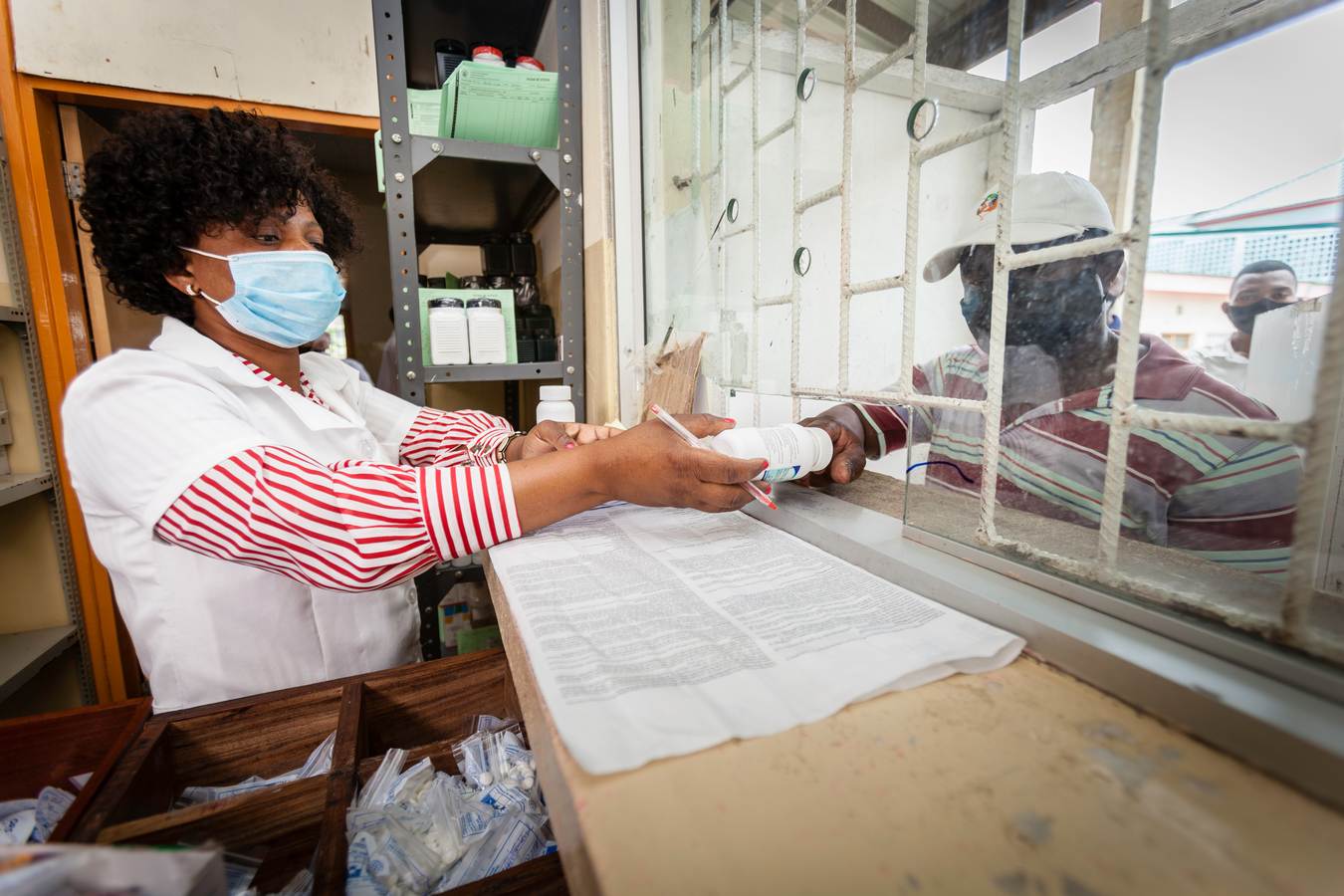
The reason for these improvements: MMDD reduced the time and financial burden for patients of monthly trips to a clinic, which often were at a considerable distance. In Tete, for example, nearly 30 percent of residents cross borders for work, so coming back monthly is a huge burden. “Patients have always asked for more medicine so they wouldn’t interrupt their lives to pick up treatment,” says Sofia Amoda, a general medical technician. “I always told them it was impossible. Now, I can give them six months of medicine, and patients are happier.”
Healthcare providers benefit, too. With daily patient traffic more manageable, providers note that the quality of care they can provide has improved. A recent ECHO study found that even though MMDD decreased patients’ doctor visits, the decline didn’t worsen clinical outcomes. It helps that the program requires that patients be virally suppressed to be eligible to enroll. That’s why Dias Afonso, a patient in Tete province on his second round of ART with the six-month model, is dedicated to taking his medication correctly.
With the success of MMDD in Tete and Niassa as well as Manica and Sofala provinces, the ECHO project plans to continue supporting the Mozambican government in scaling up the new approach. That could make HIV treatment obtainable for those who need it in Mozambique.
Read More
Infectious Diseases & Global Health Security in Sub-Saharan Africa

Bolstering Global Health Security in a Changing Environment
Environmental hazards require adaptive global health security strategies.

Beyond COVID-19: What Global Health Security Will Look Like
As leaders focus on pandemics and global health security, they should look at three related items: other diseases, social determinants of health, and logistics.

Improving Immunization Programming in Mozambique
An analysis of Mozambique’s 2015 immunization spending reveals that despite adequate resources and increases in immunization coverage, challenges to the immunization program persist. In addition to examining the efficiency of the immunization program, Mozambique would benefit from efforts to report and compile immunization spending data more effectively.This policy brief and the underlying health accounts exercise have been supported by Abt Global, through a grant secured from the Bill and Melinda Gates Foundation.Also available in Portuguese.

A Concise, Health Service Coverage Index for Monitoring Progress Towards Universal Health Coverage
There is a growing international commitment to universal health coverage (UHC), but limited means to determine progress towards that goal. The authors developed a practical index for capturing health service coverage – a critical dimension of UHC -- that was more inclusive than previous methods.The approach moved beyond common indicators of service coverage focused on infectious diseases and maternal and child health, to include information on necessary health inputs. The resulting, balanced, composite index of health service coverage demonstrated promise as a metric, likely to discriminate coverage levels between countries and regions. An important number of service provision indicators were correlated, therefore a reduced set of services performed well as a proxy for the full set of available indicators. This parsimonious index is a start toward simplifying the task of policy-makers monitoring progress on a key domain of universal health coverage.