


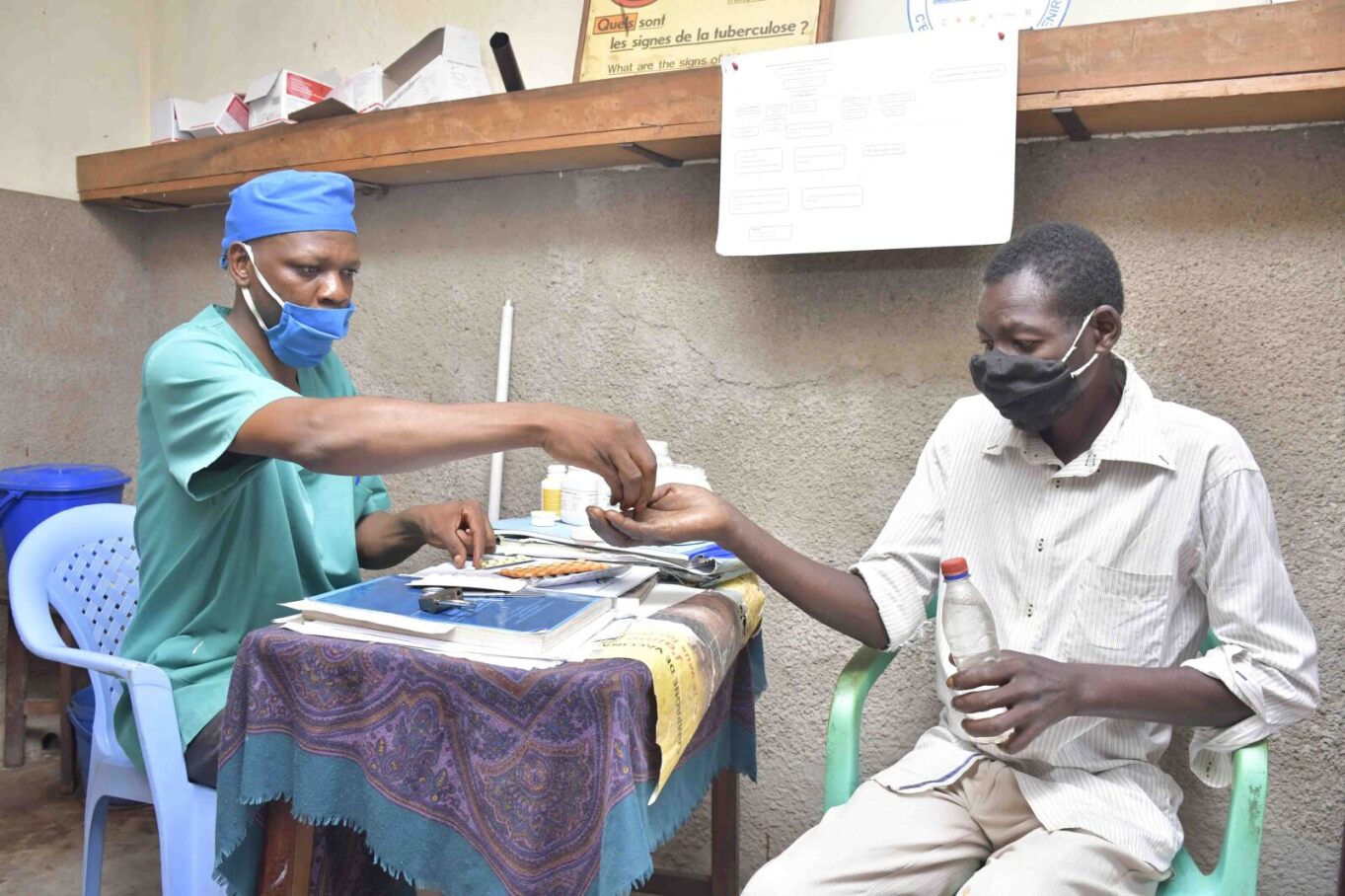
In the Democratic Republic of Congo (DRC), the stigma attached to tuberculosis (TB) makes people reluctant to admit they have it. It’s associated with HIV and poverty, and the risk of transmission is high. All of this makes it hard to detect, diagnose, and treat the disease.
But the DRC is gaining ground in the treatment of TB patients, even as cases of drug-resistant TB increase. The reason: a laser-like focus on communities. That’s the result of close collaboration between the National Tuberculosis Control Program and the Abt-led U.S. Agency for International Development’s Integrated Health Program (USAID IHP). Since the project’s inception, it has helped bring more people into treatment.
One pillar of the approach is a focus on influencers. In Mbuji-Mayi, Abt staff on the USAID IHP project trained pastors, teachers, leaders of nongovernmental organizations, women’s and youth groups, and traditional chiefs on how to raise awareness about TB and communication techniques to use to promote prevention and detection. Respected in their communities, these leaders help change social attitudes and behavior. Influencers go door-to-door to identify people with TB symptoms such as a cough and encourage them to get screening and, if necessary, treatment from a healthcare professional. Then the influencers encourage patients to adhere to their treatment regimen to prevent antibiotic resistance.
One example of the project’s success: During the last three months of 2023, community influencers referred 1,757 people suspected of having TB to diagnosis and treatment centers. On World TB Day, the leaders organized a community-wide event and collected contributions from residents for posters and informational leaflets about TB and for megaphones to make public service announcements about TB detection and treatment.
Influencers are only part of the community strategy. In alignment with USAID’s localization goals, USAID IHP has awarded nearly $5 million in grants to five local non-governmental organizations (NGOs) to identify potential TB patients and ensure follow-up treatment, particularly in small towns and villages where TB can spread undetected.
One of the grantees, Batwa Bemba, has been promoting better health—from HIV treatment to the prevention of COVID-19—and the rights of women and children in Haut-Lomami for several years. And now, national coordinator Biguette Buntu says the organization can also support an integrated approach to community involvement to combat TB. “This project has enabled us to expand our work in the province, cover a larger geographical area, and spend more time with the community,” Buntu said. “The more you spend time with the community and understand the problem, the more you can find solutions.”
The five NGOs’ activities include working with local diagnosis and treatment centers to support patient care through direct clinical follow-up, overseeing grants for doctors, and distributing nutritional support kits. In the last quarter of 2023, the NGOs supported 210 days of clinical follow-up visits by clinical doctors to patients with drug-resistant TB (DR-TB).
To improve the nutritional status of DR-TB patients, minimize adverse drug reactions, and promote patient adherence to treatment, since project inception, USAID IHP has supported 406,503 patients diagnosed with TB that have initiated treatment, 141 percent of the target. The support includes sputum sample transport, TB case management, and community events.
Along with supporting the local organizations, Abt helps the National Tuberculosis Control Program improve access to diagnosis, decentralize TB testing, and build staff capacity to detect and treat TB. All told, the pieces are in place to continue to make progress in DRC’s fight against TB.
Read More
Infectious and Vector-Borne Diseases in Sub-Saharan Africa
Bolstering Global Health Security in a Changing Environment
Environmental hazards require adaptive global health security strategies.

Beyond COVID-19: What Global Health Security Will Look Like
As leaders focus on pandemics and global health security, they should look at three related items: other diseases, social determinants of health, and logistics.

Improving Immunization Programming in Mozambique
An analysis of Mozambique’s 2015 immunization spending reveals that despite adequate resources and increases in immunization coverage, challenges to the immunization program persist. In addition to examining the efficiency of the immunization program, Mozambique would benefit from efforts to report and compile immunization spending data more effectively.This policy brief and the underlying health accounts exercise have been supported by Abt Global, through a grant secured from the Bill and Melinda Gates Foundation.Also available in Portuguese.

A Concise, Health Service Coverage Index for Monitoring Progress Towards Universal Health Coverage
There is a growing international commitment to universal health coverage (UHC), but limited means to determine progress towards that goal. The authors developed a practical index for capturing health service coverage – a critical dimension of UHC -- that was more inclusive than previous methods.The approach moved beyond common indicators of service coverage focused on infectious diseases and maternal and child health, to include information on necessary health inputs. The resulting, balanced, composite index of health service coverage demonstrated promise as a metric, likely to discriminate coverage levels between countries and regions. An important number of service provision indicators were correlated, therefore a reduced set of services performed well as a proxy for the full set of available indicators. This parsimonious index is a start toward simplifying the task of policy-makers monitoring progress on a key domain of universal health coverage.