
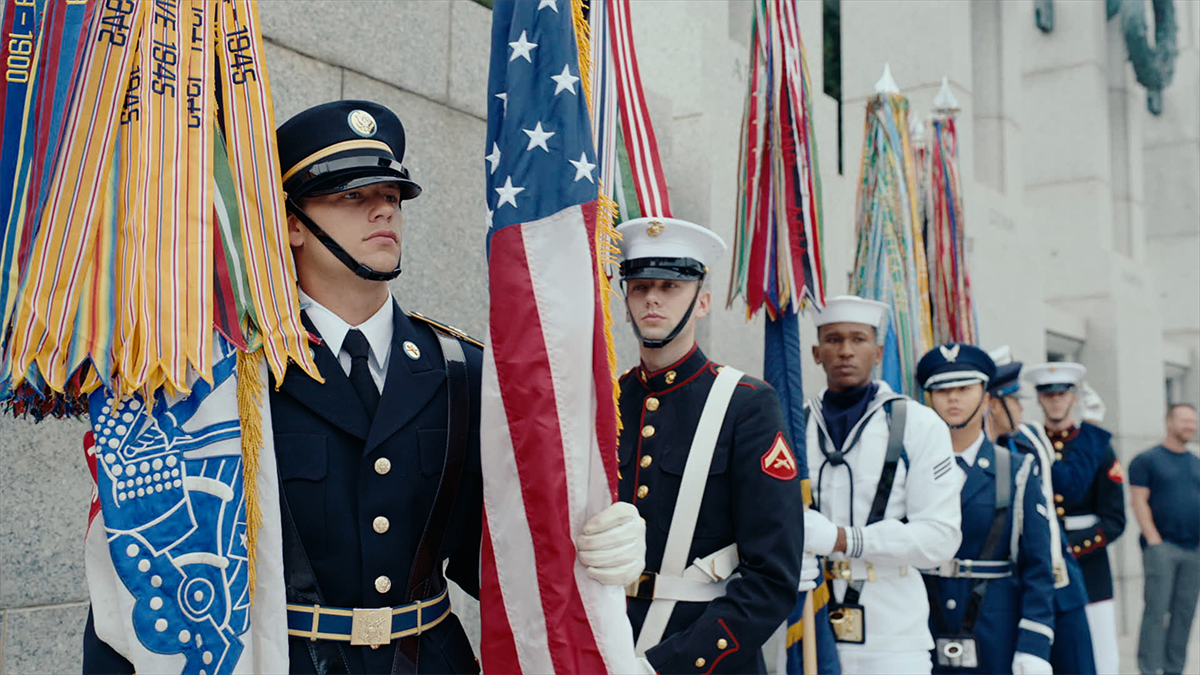
Health Across the Arc of Service
A service member cannot be fully ready if they or their family aren't healthy. And veterans deserve systems and support for good health throughout their lives.
These truths guide Abt Global's research and technology work with the Department of War's health enterprise and the Department of Veterans Affairs. They guide what we do after work too, volunteering with organizations that support military families and celebrate veterans' accomplishments. The veterans and military family members on our staff know we value their skills and mindsets, honed through service and dedication to mission.
Each November, we commemorate National Veterans and Military Families Month to show how our teams live this mission. This year, we're also spotlighting organizations that support military health and families across the arc of service.
CHAPTER 01
Readiness Begins at Home
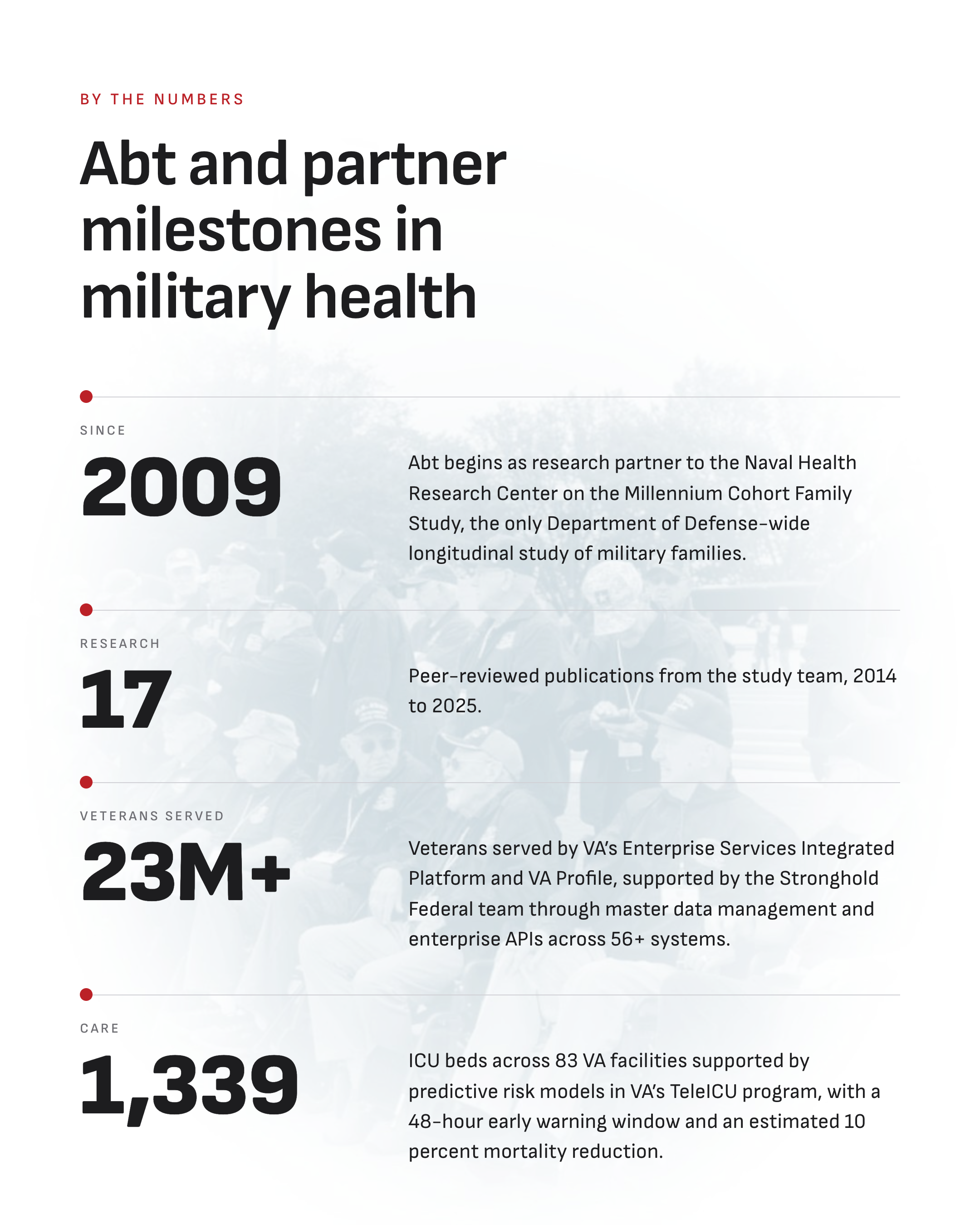
For 17 years, Abt served as research partner on the only Department of Defense-wide longitudinal study focused on military families. The Millennium Cohort Family Study—for the Naval Health Research Center with the Defense Health Agency—spanned behavioral health, family dynamics, child development, deployment and reintegration, and the transition to civilian life. Alongside a broader body of research, it has contributed to outreach through Military OneSource and programs such as Military Kids Connect, Family Readiness Groups and Key Spouse. We're continuing this focus today through evaluations of programs like SMART Recovery that seek to reduce risky drinking among active-duty service members.
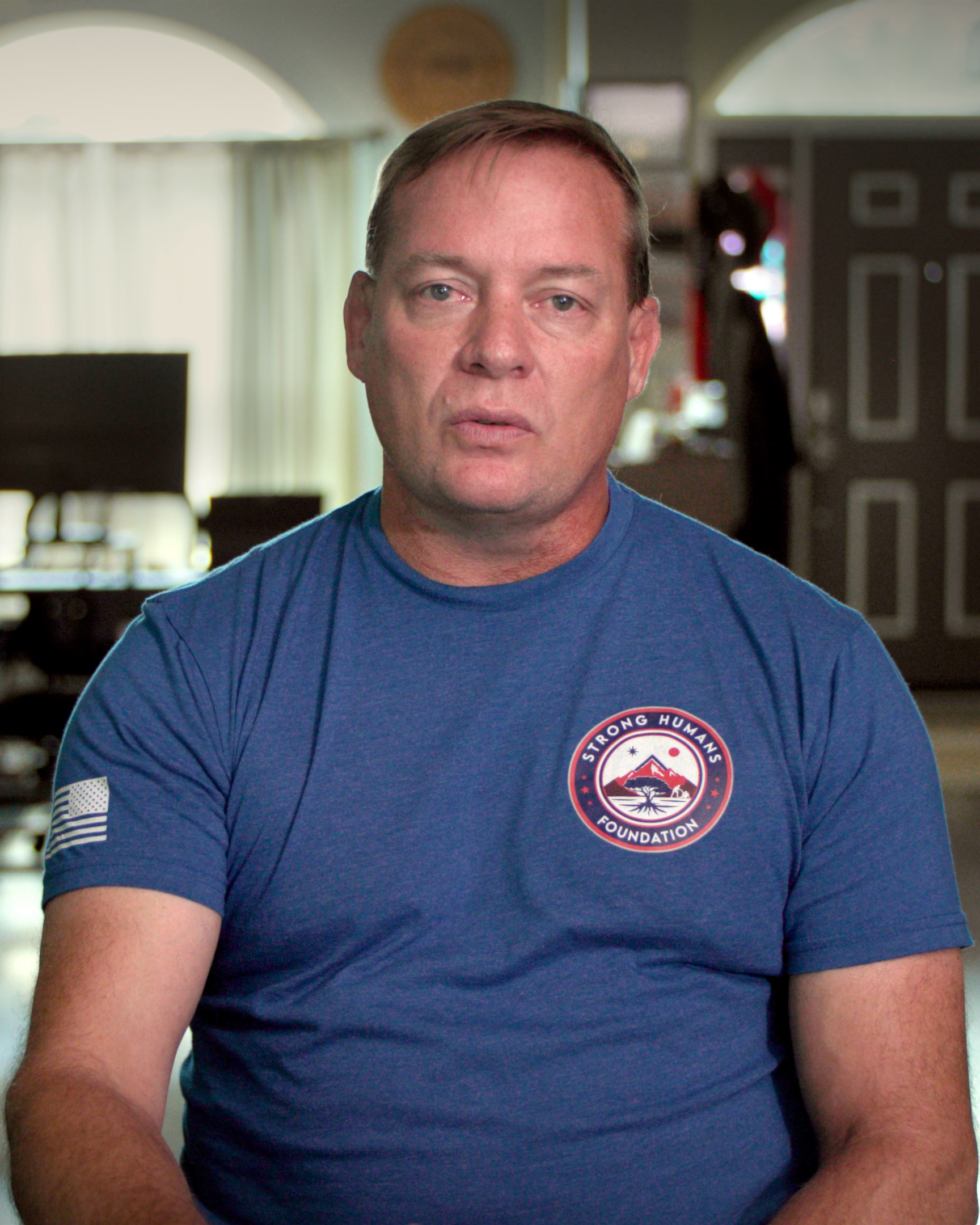
Ken Huhman knows well the difficulties faced by veterans returning home. He served more than 30 years in the Marine Corps and Air Force, much of it as a combat controller leading special operations teams in Afghanistan and Iraq. Early in his career, one of his superiors told him, "If the Marine Corps wanted you to have a family, they would have issued you one."
His service took a toll on him and his family. Ken survived spinal fractures from a parachute jump and a traumatic brain injury from an RPG blast that killed two of his teammates. In 2016, he lost his son, a Senior Airman at Dover Air Force Base.
In the early years of Afghanistan, he remembers, social workers, therapists and physical therapy simply weren't there for returning service members. Later in his service, he benefited from programs like the U.S. Special Operations Command's (SOCOM) Preservation of the Force and Family (POTFF) program. It gave returning military operators time with counselors and teammates to learn approaches that smooth the transition from combat to household living.
Today he passes those tools forward through the Strong Humans Foundation, which he created so veterans, first responders and their families can "create a sanctuary" at home. Nina Chavez, a director at TSPi, Abt's technology division, serves as secretary of the board of the Strong Humans Foundation.
“They started gathering lessons learned of what was successful, what wasn’t. They’ve created an incredible program that I think saves a lot of marriages, a lot of families.”
Ken Huhman
Retired Chief Master Sergeant, U.S. Air Force; Founder, Strong Humans Foundation
CHAPTER 02
Care That Follows You
Family readiness lives in health records, scheduling systems and benefits portals. It is tested hardest at transition.
Harold Poston, Abt's Growth Lead for Military and Veterans Affairs, knows this firsthand. Both he and his wife are retired Army officers, service-disabled veterans and lifelong TRICARE beneficiaries. Their daughters were born in Army hospitals on two continents.
He discussed military health systems—what's working and what's broken—with Geoff Ames, co-founder and vice president of National Consulting Partners, a Service-Disabled Veteran-Owned Small Business. His company is now partnered with Abt as Stronghold Federal.
When service members move from the military health system to the VA, records sometimes follow only in pieces. Scheduling does not always line up with referrals. Staff still hand-key data between systems.
This podcast explores a vision of care that asks what it takes to be the healthiest service member, the healthiest spouse, and the healthiest veteran you can be. That means modernized systems that talk to each other.
“We don’t really have a health record, we have a sick record. The record doesn’t tell me how healthy I am. It only tells me when I came in and something was wrong.”
Harold Poston
Abt Video Podcast
CHAPTER 03
Service Beyond the Contract
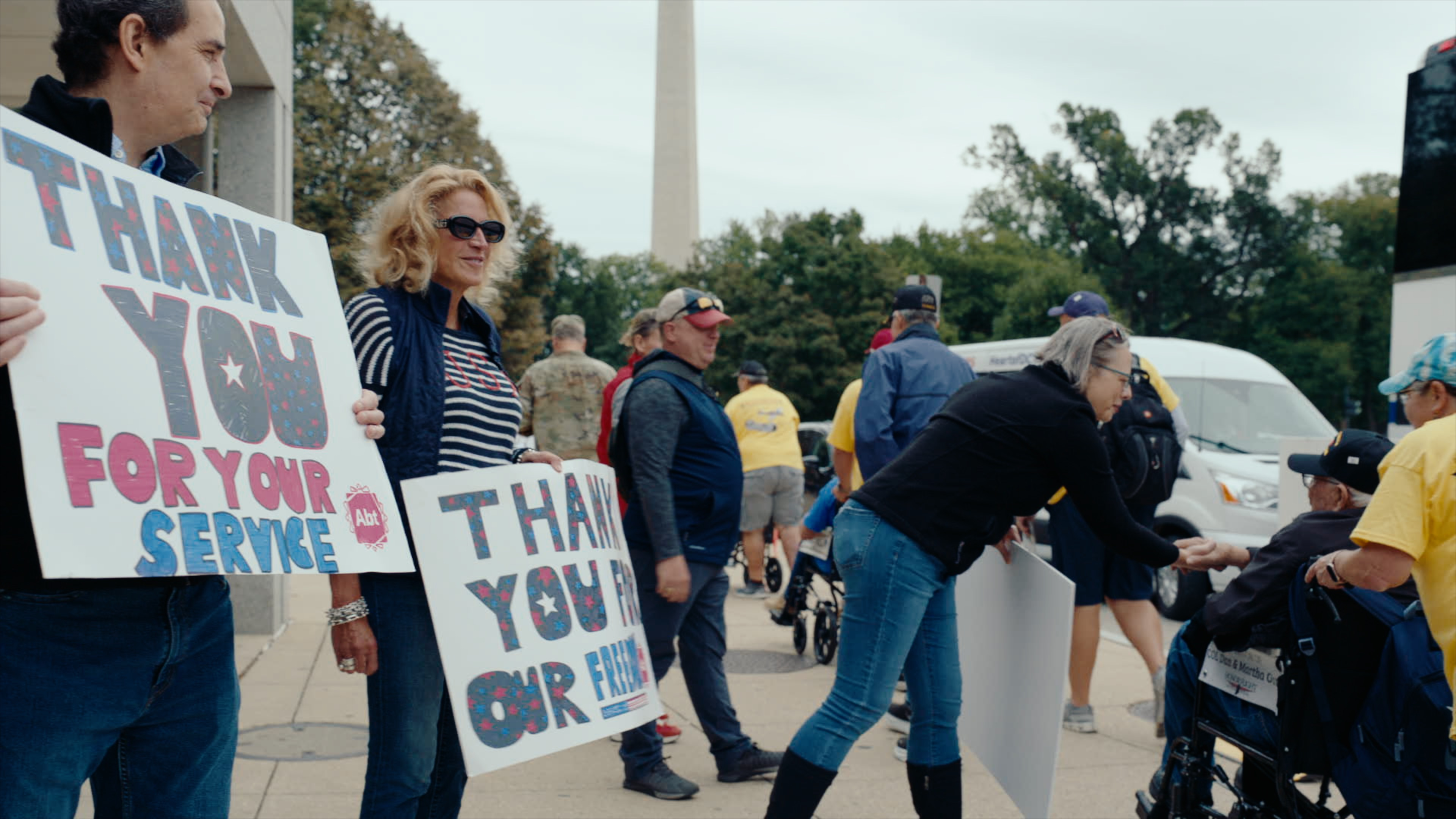
On a fall Saturday, Abt staff joined a crowd at the National World War II Memorial to welcome an Honor Flight, holding signs that read "Welcome to DC" and "Thank you for our freedom."
The Honor Flight Network—which celebrated its 20th anniversary that Saturday—brings veterans from all over the country to Washington D.C.’s memorials to the wars they fought. Volunteers come too, to thank them for their service.
Honor Flight is also a family story. Guardians fly in place of parents who no longer can. A veteran walks the memorials with his sons. And spouses see a side of their loved one hidden for decades.
“I have had family members come up to me and they said, thank you for giving me my husband back. He was like that before he went to Vietnam. I haven't seen that aspect of him in 50 years. Now I see it again.”
Earl Morse
Founder, Honor Flight Network
CHAPTER 04
The Yellow Footprints
Every Marine remembers the yellow footprints. Recruits step off the bus at night, disoriented, and drill instructors order them onto the painted outlines on the pavement.
Jesse Johnson came to the military looking for a way "to get me on the straight and narrow and find the right path forward." He had never picked up a camera, but when a recruiter listed combat photographer among his options, something clicked. He deployed to Afghanistan, documenting the Marines who protected local crews as they paved the second-largest road in the country.
Today Jesse is a release train engineer for TSPi, the technology division of Abt Global, which hired him at 31 with no IT experience. He earned his certifications in Scaled Agile and brings a Marine's discipline to a major federal modernization program.
His advice to anyone leaving the service: Use what you have earned. No one gets from the yellow footprints to a second career on grit alone.
“Make sure you use the resources that they provide. That doesn't just go for career, it goes for mental health, for education. You served your time in the military, so make sure you use those resources that you are entitled to.”
Jesse Johnson
Release Train Engineer, TSPi, a division of Abt Global
From the yellow footprints to an Honor Flight homecoming, the arc of service is long, and military families walk every step of it. Ken Huhman's sanctuary at home, Jesse Johnson's second career, and the veterans welcomed at the World War II Memorial all show that health and well-being depend on support that shows up at every stage.
That is the work Abt and our partners take on—research that shows what helps families, systems that carry records and care across transitions, and staff who give their own time to say thank you. This November and every month, we're proud to serve those who served, and the families who serve alongside them.